

Industrial Chinatowns Near US Border Brace for Tariff Uncertainty
In Monterrey, Mexico, sprawling industrial parks filled with Chinese-owned factories signal a new phase of globalization. These industrial Chinatowns, built as part of a nearshoring wave, aim to capitalize on tariff-free access to the US under the USMCA trade agreement. Yet, with President-elect Donald Trump poised to take office, fears of new tariffs have manufacturers and their Mexican hosts reconsidering their strategies.
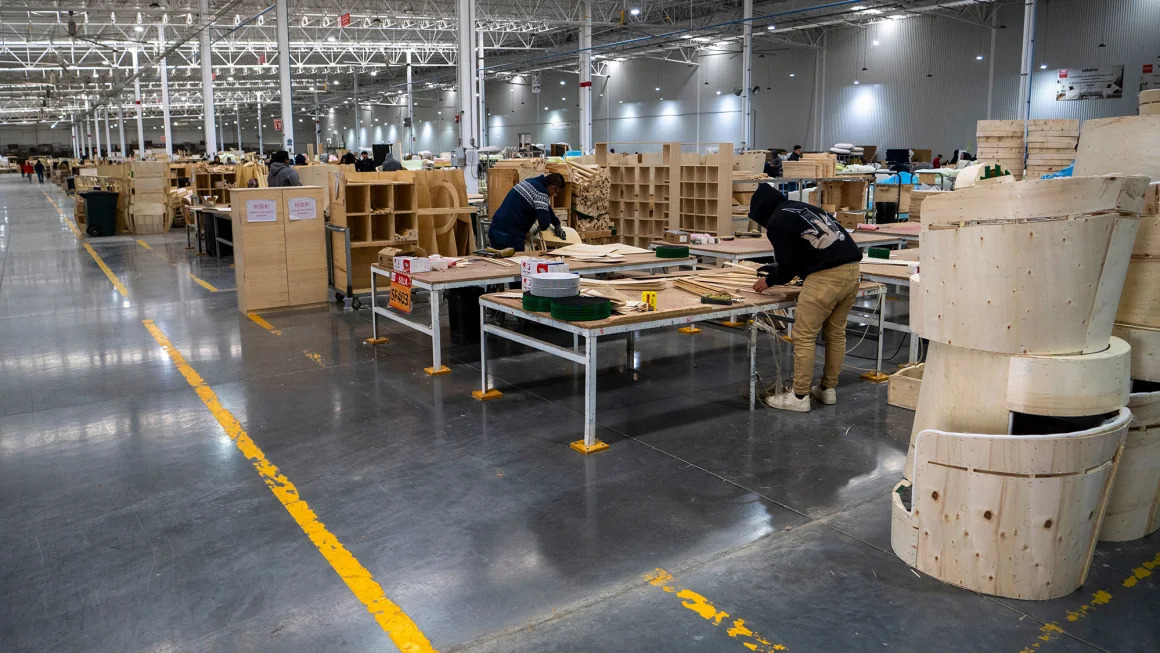
Row upon row of warehouses dot Monterrey’s landscape, with red and gold logos reflecting Chinese cultural symbols. These facilities—many owned by Chinese companies—produce furniture, electronics, and car parts destined for the US market. The Hofusan Industrial Park alone houses 40 Chinese companies and exemplifies the nearshoring trend fueled by tariffs imposed on Chinese goods during Trump’s first term and upheld by President Joe Biden.
César Santos, a local landowner turned industrial developer, recalls how tariffs on Chinese imports spurred interest in Mexico. “When tariffs hit China, companies started looking at us,” Santos said. Monterrey’s proximity to the US border—just 160 miles from Texas—makes it an attractive alternative for manufacturers seeking logistical advantages.
Chinese investment in Mexico has soared, from $5.5 million in 2013 to $570 million in 2022. However, with Trump’s proposed 25% tariff on Mexican goods, uncertainty looms over the future of this partnership.
For businesses like Kuka Home North America, the tariff threat is already having tangible effects. Matt Harrison, Kuka’s North American president, has halted expansion plans and is exploring alternatives in Vietnam. “Absorbing a 25% tariff isn’t feasible,” Harrison said. “Ultimately, American consumers will bear the cost.”
Santos, however, remains optimistic, arguing that Mexico’s logistical advantages and lower costs still make it competitive compared to manufacturing in China. Meanwhile, he’s bolstering security around his industrial park by donating land to local police, aiming to attract more investment despite potential challenges.
Inside the factories, cultural exchange is flourishing. Mexican workers and Chinese managers collaborate closely, with local employees making up 95% of the workforce. Zhang Jianqiu, a Chinese engineer, has adapted to life in Mexico by learning Spanish and embracing local cuisine. “Business is business, politics is politics,” Zhang remarked, emphasizing resilience amid uncertainty.
Mexico finds itself at the center of a geopolitical tug-of-war between the US and China. Horacio Carreón, an international business professor at Tecnológico de Monterrey, likened Mexico’s position to a soap opera love triangle. “Should Mexico stay loyal to its long-time partner, the US, or deepen ties with China?” he asked.
Mexico’s export economy has flourished, even surpassing China in exports to the US in 2023. Yet, the possibility of tariffs could force tough decisions. “We’ve created spaces for thousands of jobs,” said developer Ramiro González. “Now, we just have to see how the landscape shifts.”
While Trump’s tariff threats create uncertainty, Mexican industrial hubs like Monterrey remain hopeful about their future. Developers and manufacturers are adapting, from exploring new markets to securing local investments. For many, the nearshoring boom represents a long-term strategy—one that could withstand political shifts.
As Santos reflects on his family’s transformation from ranchers to industrial developers, he remains confident. “We’re ready for more change if needed,” he said, signaling resilience in the face of evolving challenges.