

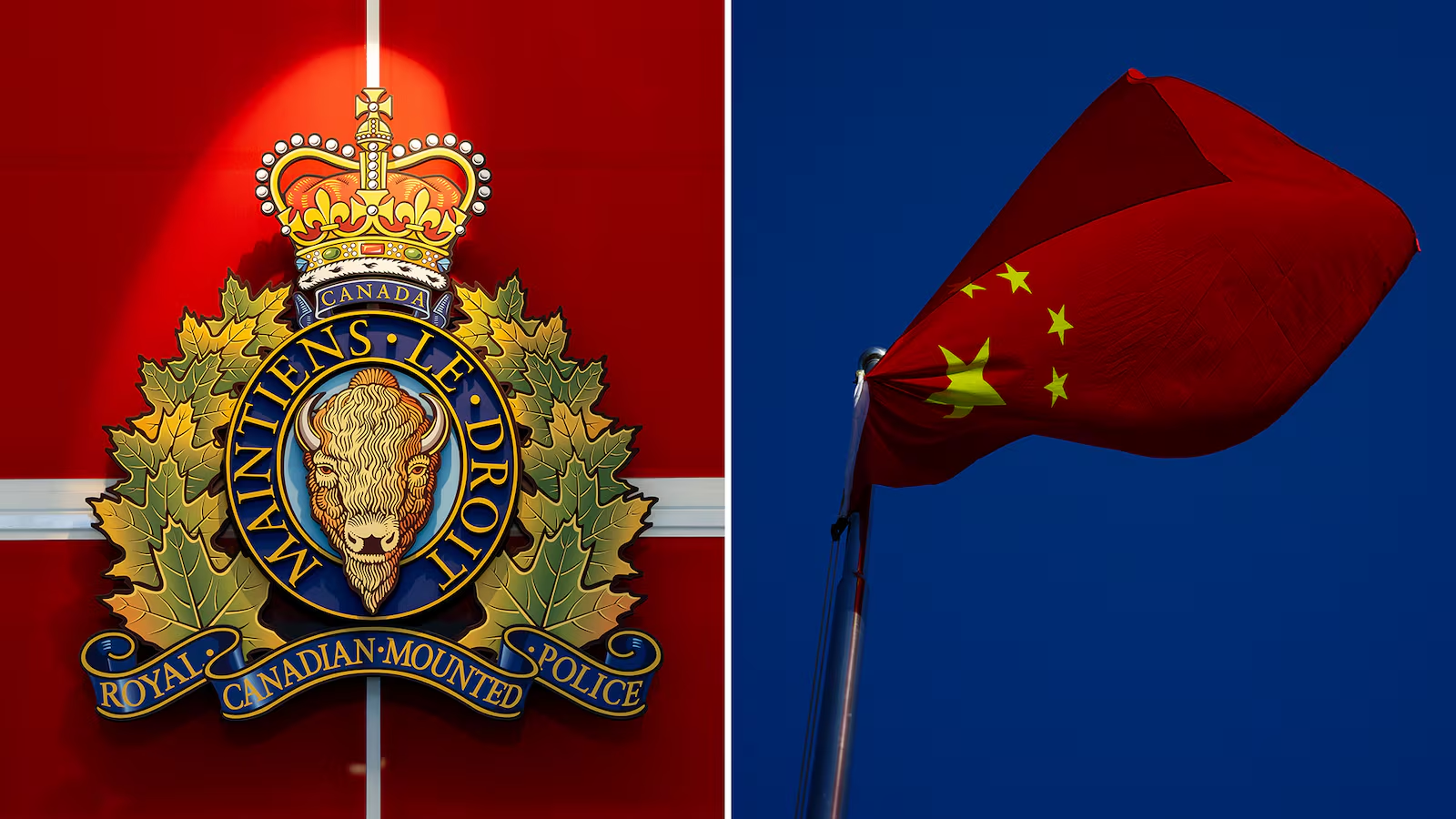
Serious concerns about foreign interference and transnational repression are growing in Canada after court documents filed in the trial of former RCMP officer William Majcher revealed allegations that Chinese authorities targeted at least 25 Canadian residents as part of Beijing’s controversial anti-corruption operations.
The allegations surfaced during Majcher’s ongoing trial in Vancouver, where the former Mountie is accused of participating in China’s “Operation Fox Hunt” and “Operation SkyNet” campaigns — initiatives officially presented by Beijing as anti-corruption efforts aimed at repatriating economic fugitives.
However, human rights organizations and security experts argue the campaigns have also been used to intimidate political dissidents, critics of the Chinese government and Chinese nationals living abroad.
Majcher, 63, has pleaded not guilty to charges alleging he helped gather information intended to pressure a Vancouver resident, Kevin Sun, to return to China. Court testimony heard that Sun could have faced severe punishment, including a possible death sentence, if returned to China. Sun denies any wrongdoing.
The trial has intensified scrutiny of the Canadian government’s recent decision to renew a co-operation agreement between the Royal Canadian Mounted Police and China’s Ministry of Public Security.
The renewed agreement was signed earlier this year during Prime Minister Mark Carney’s visit to Beijing, where Canada and China also discussed trade expansion and economic co-operation.
Human rights advocates say the timing of the renewed policing partnership is troubling given evidence presented during the trial alleging that Chinese officials operated beyond Canadian laws and intimidated residents living in Canada.
Lansdon Chan of Hong Kong Watch called for full public disclosure of the agreement.
“The least the government can do is disclose fully what is in the agreement for transparency and public confidence,” Chan said, warning that many members of the Hong Kong and Chinese diaspora communities fear they are not adequately protected when speaking out against Beijing.
One example highlighted in court involved former Chinese Supreme Court judge Xie Weidong, who relocated to Canada after criticizing China’s justice system. According to RCMP affidavits presented during the proceedings, Chinese authorities allegedly imprisoned Xie’s sister, kidnapped his son in China and sent operatives to Toronto to pressure him into returning to China.
The trial also heard testimony from RCMP Superintendent Peter Tsui, who previously served as a liaison officer at the Canadian embassy in Beijing. Tsui testified that during a 2018 RCMP-supervised visit to Vancouver, several visiting Chinese security officials temporarily disappeared for hours, raising fears they may have been attempting to conduct unauthorized operations on Canadian soil.
Security experts say the case demonstrates the growing complexity of foreign interference threats facing Canada.
Kent Roach, a national security expert at the University of Toronto, questioned why Canada renewed the policing agreement despite ongoing concerns over Chinese state activities.
“There needs to be robust safeguards,” Roach said, arguing Parliament or Canada’s national security oversight bodies should review the agreement to ensure protections are in place for Canadian residents.
Meanwhile, the newly appointed foreign influence transparency commissioner, Anton Boegman, is expected to play a major role in implementing Canada’s new foreign interference legislation under Bill C-70.
Critics, however, say progress on establishing a formal foreign agent registry has been slow, raising concerns that economic diplomacy with China may be advancing faster than Canada’s efforts to counter foreign interference and protect vulnerable communities.
The RCMP has defended the renewed co-operation agreement, stating that all collaboration with Chinese authorities must comply with Canadian laws and sovereignty protections.
The trial verdict in the Majcher case is expected later this week and is being closely watched by security experts, human rights advocates and diaspora communities across Canada.