

U.S. Court Blocks Trump’s Sweeping Tariffs in Landmark Trade Ruling
n a stunning legal decision with far-reaching implications, a federal court in Manhattan has ruled that former President Donald Trump overstepped his executive authority by unilaterally imposing broad tariffs on international imports, marking a major setback for one of the cornerstones of his administration’s economic policy.
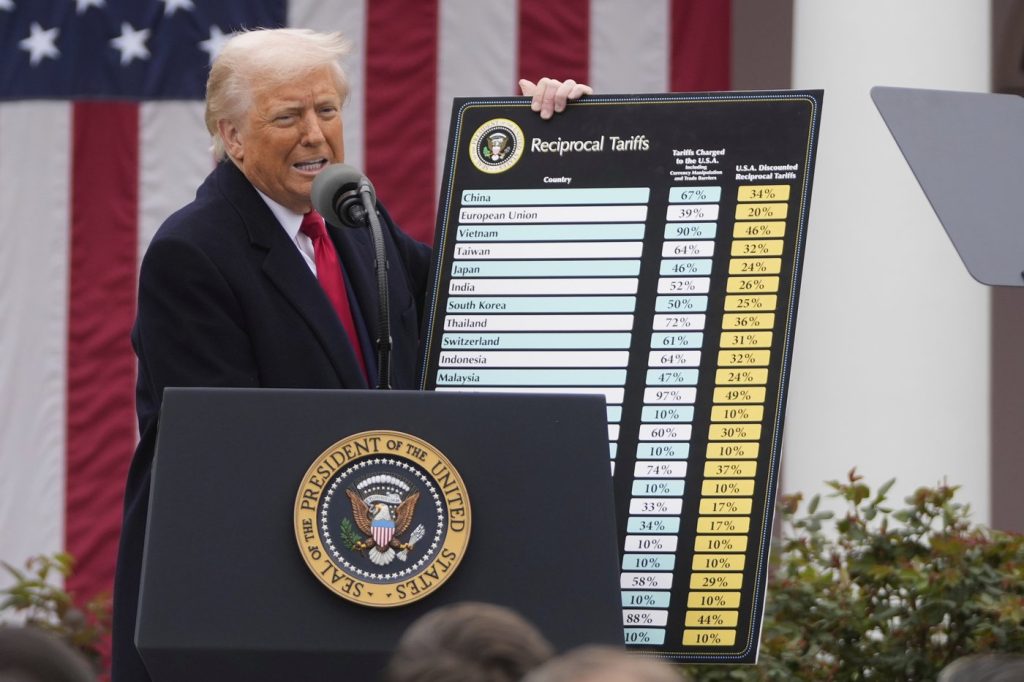
The U.S. Court of International Trade, in a unanimous decision from a three-judge panel, issued a permanent injunction against Trump’s “Liberation Day” tariffs and other trade measures enacted under the International Emergency Economic Powers Act (IEEPA). The court found that IEEPA does not grant the president the power to impose tariffs, invalidating key portions of Trump’s global trade agenda, including:
- 30% tariffs on Chinese goods
- 25% tariffs on goods from Mexico and Canada
- 10% universal tariffs on most imports
These tariffs had been introduced as emergency measures to combat perceived economic threats and to target issues such as fentanyl trafficking. However, the court ruled that such actions exceeded the president’s legal authority, stating:
“The worldwide and retaliatory tariff orders exceed any authority granted to the President by IEEPA to regulate importation by means of tariffs.”
The only exceptions upheld in the ruling were tariffs on autos, auto parts, steel, and aluminum—measures enacted under a different law, the Trade Expansion Act’s Section 232.
Widespread Economic and Political Repercussions
Stock markets responded positively, with Dow futures climbing over 500 points, and the Nasdaq and S&P 500 also rising in after-hours trading as investors welcomed the prospect of more stable trade relationships and lower import costs.
The lawsuit was led by the Liberty Justice Center on behalf of small businesses, including wine importers, who argued that the tariffs hurt American entrepreneurs and consumers alike.
“The court’s ruling is not just a win for small business, it’s a win for the rule of law,” said Jeffrey Schwab, the plaintiffs’ attorney. “Presidents can’t simply invoke emergency powers to bypass Congress and tax Americans.”
Twelve Democratic-led states also filed a parallel lawsuit, arguing the tariffs amounted to unauthorized tax hikes.
“This ruling reaffirms that our Constitution doesn’t grant any president unchecked authority to upend the economy,” said Oregon Attorney General Dan Rayfield. “Trade decisions must follow the law.”
White House Response and Future Outlook
While President Trump is no longer in office, his legal team and supporters are vigorously defending the tariffs. White House spokesperson Kush Desai called the ruling a dangerous precedent:
“It is not for unelected judges to decide how to properly address a national emergency. President Trump pledged to put America First, and the Administration is committed to using every lever of executive power to restore American greatness.”
In contrast, economic analysts are calling the court’s decision a potential turning point in restoring checks and balances over trade policy.
“This is a spectacular ruling,” said Gary Clyde Hufbauer, senior fellow at the Peterson Institute for International Economics. “It could rein in presidential overreach that’s gone largely unchecked for decades.”
The administration filed an appeal Wednesday evening. While the case may move to the Federal Circuit Court, legal experts say the matter could ultimately be resolved by the U.S. Supreme Court, especially given its constitutional implications regarding separation of powers.
A Warning Shot to Future Presidents
This case sends a clear signal to future administrations that emergency powers under IEEPA cannot be used as a blanket authorization for tariff-based economic policy. With over $3 trillion in projected economic impact, the ruling may realign U.S. trade relationships and bring renewed congressional oversight to tariff decisions.
For now, the business community and global trading partners await further clarity as the appellate process unfolds.