

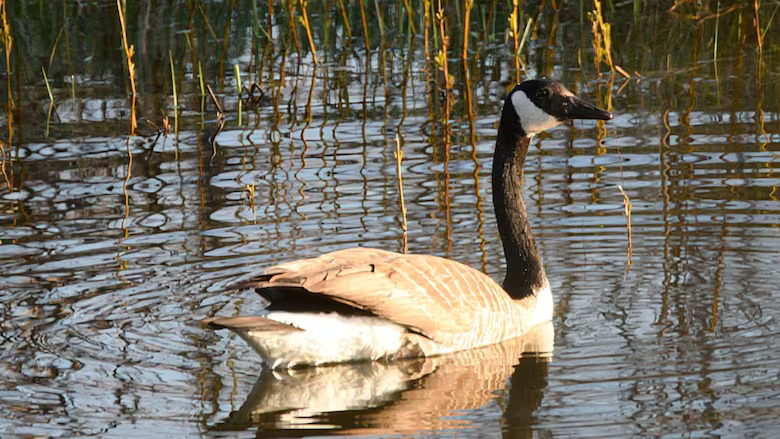
A confirmed case of highly pathogenic avian influenza (HPAI), commonly known as bird flu, has been detected in a Canada goose at Rouge National Urban Park, with five additional suspected cases, according to Parks Canada.
The discovery was made following a preliminary diagnostic report by the Canadian Wildlife Health Cooperative, which confirmed the virus in a deceased goose. While no further testing will be conducted, officials suspect that the other symptomatic geese are also infected.
“For wildlife, it’s a bit of a precarious situation—obviously, it’s highly contagious,” said Jory Mullen, Rouge’s ecosystem scientist. “The virus can survive for months in ideal conditions.”
Although Canada has seen fewer bird flu cases than the United States, where the H5N1 virus has severely impacted the poultry and cattle industries, Ontario and the GTA remain at risk. Experts warn that wildlife, domestic animals, and pets are particularly vulnerable.
In a 2023 outbreak, a dog in Oshawa died after contracting bird flu from exposure to a deceased bird.
“It’s horrible because I’m sure those owners did not in any way think their dog coming into contact with a dead bird would lead to the death of their sweet dog,” Mullen added.
The virus spreads through fecal matter, saliva, and mucous membranes and can also linger in dead birds, making proper handling and public caution essential.
While the risk to humans remains low, experts urge the public to avoid approaching wild birds, whether dead or alive.
Dr. Andrea Kirkwood, a professor of biological sciences at Ontario Tech University, reassured the public: “The main message is just for people not to get too concerned.” However, she emphasized that individuals who come into contact with a sick or dead bird should disinfect their hands and seek medical advice if experiencing flu-like symptoms.
To minimize risk, officials recommend keeping dogs on leashes in parks and ensuring outdoor cats are not exposed to infected wildlife.
The Toronto Zoo, located within the Rouge Valley, has reinforced its protective measures to safeguard resident and visiting bird populations.
“COVID was devastating for people, but this is kind of the equivalent if you’re a wild bird,” said Dr. Nic Masters, the zoo’s director of wildlife health.
Zoo staff are taking precautionary measures, including:
- Wearing personal protective equipment and changing between animal enclosures.
- Using netting to separate visitors from birds at the bird pavilion.
- Feeding penguins indoors to prevent exposure to wild birds such as gulls.
- Participating in provincial virus tracking by testing sick or deceased wild birds found on-site.
To assist in monitoring and containment efforts, the public is urged to report any sick, deceased, or injured birds to Parks Canada or by calling 311.
Signs of infection in birds may include:
✔ Unusual movements (twitching, tremors, loss of coordination)
✔ Isolation from flocks
✔ Lethargy or sudden death
“If it’s strange, report it,” Mullen emphasized.
With the bird flu outbreak continuing globally, experts stress that vigilance and responsible wildlife interactions are key to minimizing its impact on Ontario’s ecosystem.
For more information or to report affected wildlife, contact Parks Canada or Toronto Wildlife Centre.