

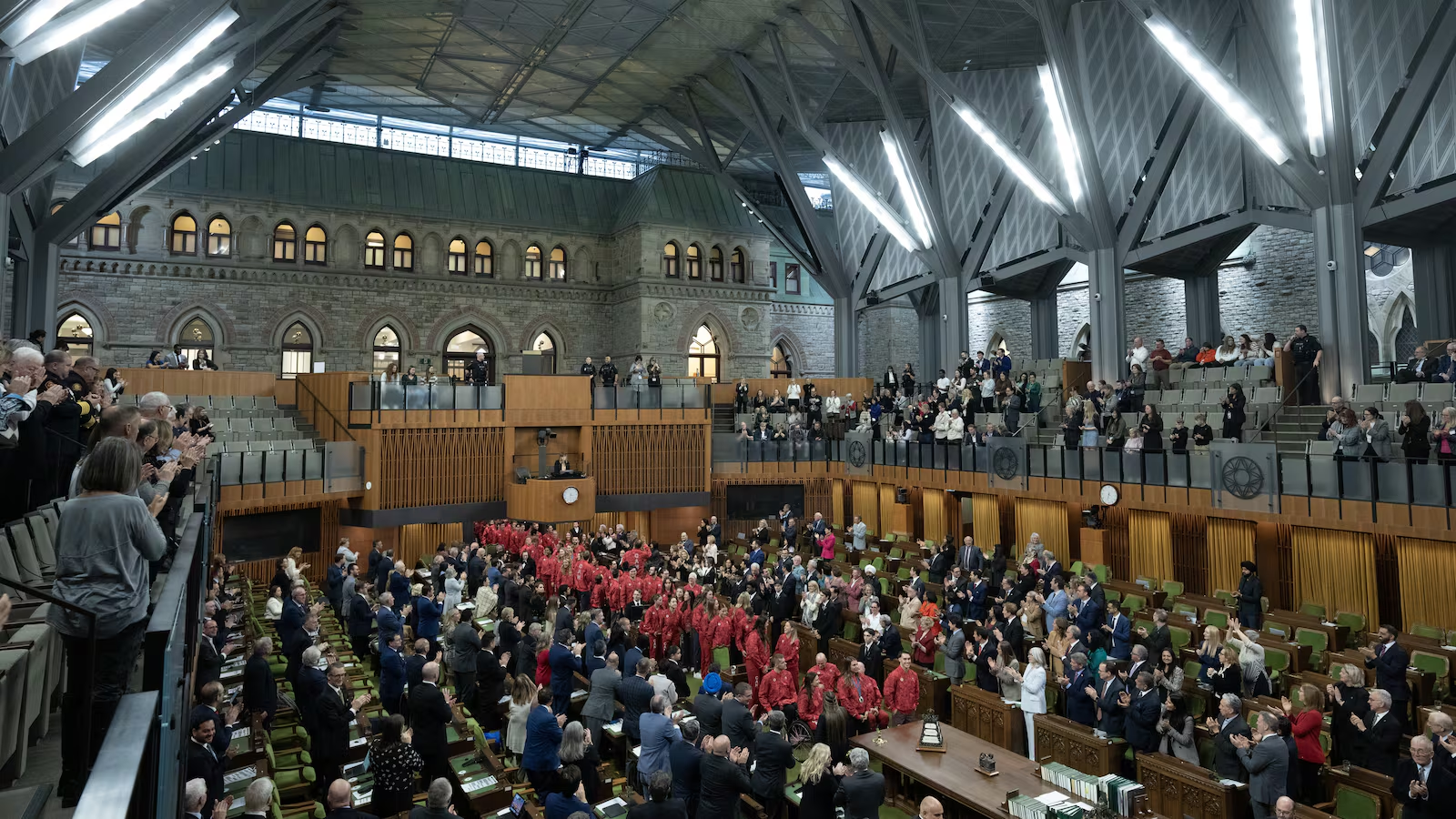
Members of Parliament spent a record-breaking $187.8 million in 2024, marking the highest total ever disclosed in a single calendar year. The eye-popping figure includes over $32 million in travel expenses and nearly $2 million for hospitality, sparking fresh scrutiny over how taxpayer dollars are being used on the Hill.
The numbers, pulled from newly released expenditure disclosures, reveal a sharp $12.7 million increase over 2023. Salaries for MP staff accounted for the largest portion, totalling $114.1 million, followed by $39.8 million on third-party contracts and $1.9 million on hospitality.
On average, each MP spent $547,000, but only ten crossed the $700,000 mark—led by outgoing Bloc Québécois MP Kristina Michaud, who billed taxpayers $775,000, including a staggering $328,000 in travel. That’s even more than Nunavut MP Lori Idlout, whose remote riding requires extensive travel logistics.
Michaud was followed by B.C. Conservative Frank Caputo ($769,158) and Alberta’s Mike Lake ($744,595). The top ten also included three Liberals, two NDP members, and one additional Bloc MP.
At the other end of the scale, Liberal MP Yves Robillard, who also didn’t seek re-election in 2025, was the most frugal, spending just $378,000—less than half of what Michaud and Caputo claimed.
By party average, the NDP led all parties, spending $583,000 per MP, followed by the Bloc Québécois at $565,000, the Greens at $559,000, the Conservatives at $556,000, and the Liberals at $532,000. While larger parties receive additional federal resources for research and administration, the per-MP expenses still raised eyebrows.
Drilling into the details, Mike Lake topped the country for staff salary spending at $486,000, roughly $205,000 above the national average. On the hospitality front, Liberal Minister Dominic LeBlanc led all MPs with nearly $16,000 in taxpayer-funded meals—many at Thai restaurants and The Keg.
Bloc MP Mario Beaulieu led in third-party contract spending, logging $273,000, more than double the national average. These contracts typically include advertising, office supplies, and digital outreach.
Geography played a notable role in travel spending, with MPs representing rural, northern, and coastal ridings generally claiming more for travel. However, when travel is excluded, Liberal James Maloney emerged as the highest spender, followed closely by Caputo and Lake, even without their travel tallies.
The report also analyzed separate budgets allocated to party leaders and house officers, which are not included in the MP-by-MP breakdown. When factored in, Conservative leader Pierre Poilievre led all parliamentarians in total spending, with $8.8 million, including $7.4 million on staff. In contrast, his MP-specific expenses were among the lowest in Canada at just $241,000.
Other party leaders trailed Poilievre, including Justin Trudeau ($4.2 million), Jagmeet Singh ($3.8 million), and Yves-François Blanchet ($3.7 million).
Experts say the rise in expenses reflects both shifting roles and looser spending norms. Kathy Brock, a political scientist at Queen’s University, noted that MPs today take a more hands-on approach to policy and community outreach, which can drive up costs. “There’s also a growing acceptance of public deficits, which contributes to a more liberal view on spending,” she said.
Still, watchdogs like Duff Conacher of Democracy Watch say transparency issues persist. “MPs enforce their own rules in secret through the Board of Internal Economy,” he said. “There’s no public oversight when it comes to determining what’s excessive or not—especially for things like hospitality, where MPs aren’t even required to submit detailed receipts.”
While Canadians continue to foot the bill, the debate over accountability and oversight is far from over. The next round of disclosures may show whether 2025 continues the record-setting trend—or whether a tighter fiscal lens is finally being applied on Parliament Hill.