

A Canadian company has taken a major step toward supporting future human life on the moon after winning a national competition for developing technology capable of extracting and purifying drinking water in the harsh lunar environment.
Canadian Strategic Missions Corporation earned top honours in the Aqualunar Challenge with its award-winning system called LunaPure, a compact technology designed to melt lunar ice and purify water for astronauts living and working on the moon.
The challenge, organized by the Canadian Space Agency, invited companies across Canada to develop practical solutions for one of the biggest obstacles facing future lunar missions — reliable access to clean water.
Daniel Sax, CEO of Canadian Strategic Missions Corporation, said the system was specifically engineered to operate under the moon’s extreme conditions, where every kilogram of equipment launched into space carries enormous costs and operational challenges.
“There’s no shortage of challenges to purifying water in space,” Sax said. “We were able to develop a system designed to operate in the moon’s extreme conditions.”
The LunaPure system, described as being roughly the size of a box of books, uses solar-generated heat to melt ice before triggering a chemical purification process that removes contaminants and produces clean water.
The innovation earned the company the competition’s grand prize of $400,000.
The technology could play a critical role in future lunar exploration missions, particularly under NASA’s Artemis Program, which aims to return astronauts to the moon and eventually establish a long-term lunar base.
The recent Artemis II mission included Canadian astronaut Jeremy Hansen, marking another major milestone in Canada’s growing role in lunar exploration.
Experts say water extraction on the moon is essential not only for drinking water but also for producing oxygen and rocket fuel through electrolysis, a process that separates hydrogen and oxygen from water molecules.
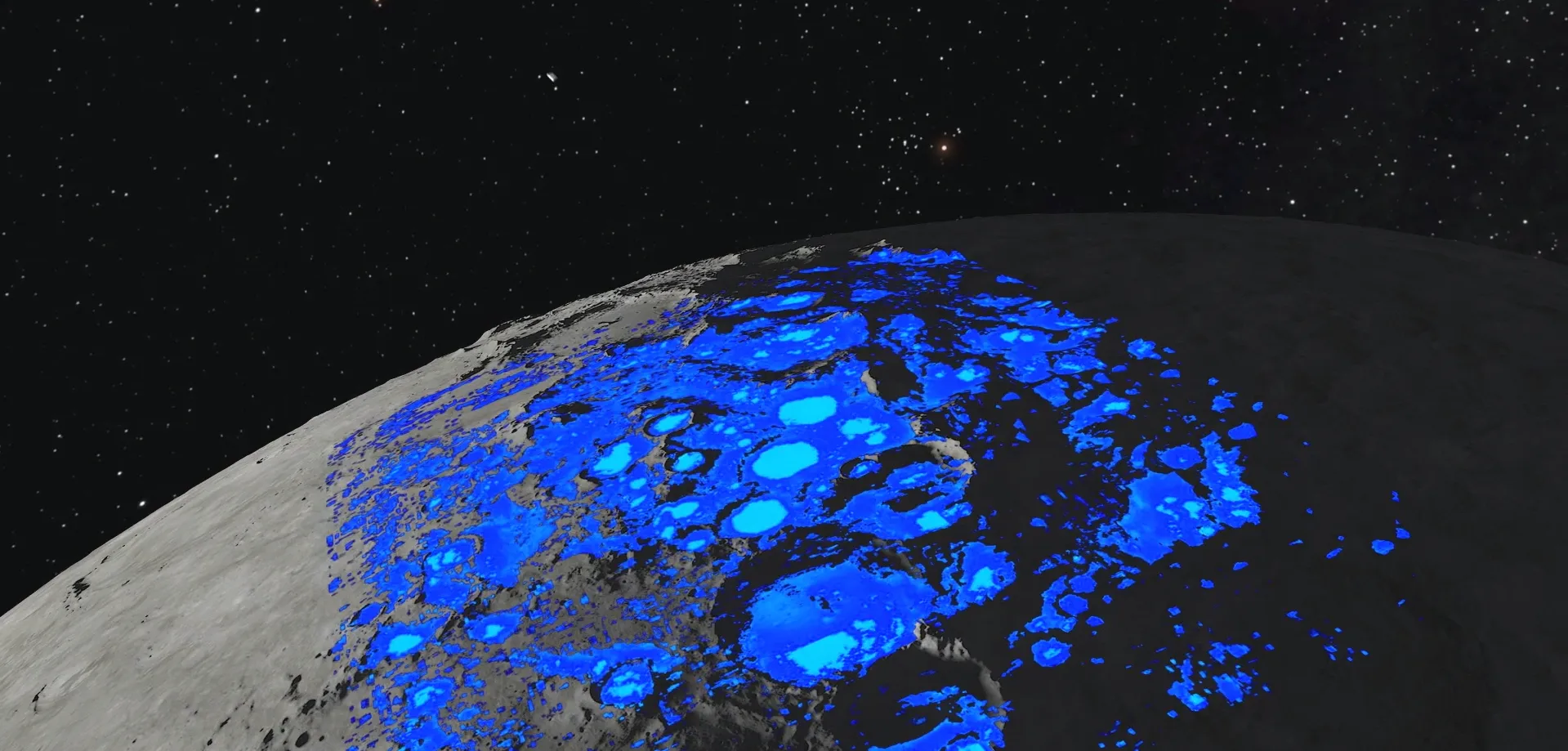
Tara Hayden, a researcher at Western University, said scientists now believe the moon contains vast reserves of frozen water trapped inside permanently shadowed craters near the lunar poles.
“We now believe there is around 600 billion kilograms of water in the form of ice on the moon,” Hayden explained.
She added that while locating and extracting lunar ice remains technically difficult, innovations like LunaPure could significantly improve the feasibility of long-term human habitation beyond Earth.
The technology could also eventually help address water scarcity challenges on Earth by improving methods of locating and purifying hard-to-access water sources in remote or drought-affected regions.
Sax said the company hopes LunaPure could eventually become part of future lunar missions and perhaps support human life on the moon for decades to come.
“If we are lucky and play our cards right, our technology could be part of future lunar missions,” he said.