

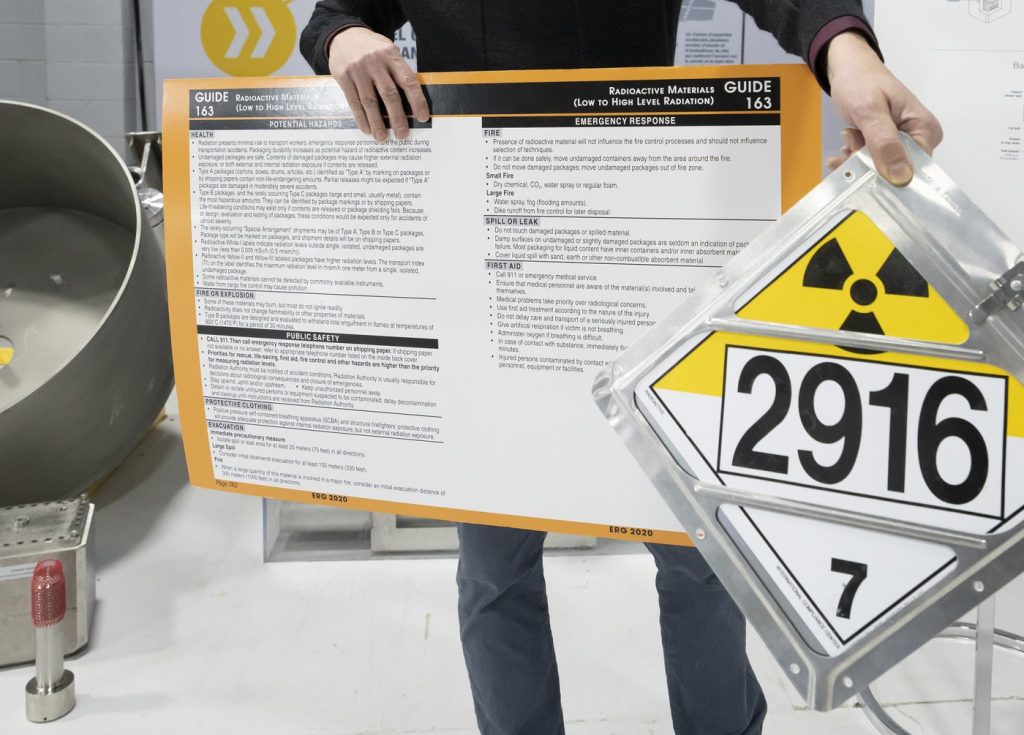
With millions of bundles of radioactive used nuclear fuel set to be buried deep underground in northern Ontario, the Nuclear Waste Management Organization (NWMO) has confirmed it is now beginning the process of identifying a second site for long-term storage of other forms of radioactive waste.
The first deep geological repository, selected after a 14-year search, is expected to begin operation in the 2040s and will store high-level waste, primarily spent nuclear fuel from Canada’s fleet of nuclear reactors. That site is located near the Township of Ignace and the Wabigoon Lake Ojibway Nation in northern Ontario.
However, the NWMO says a second, separate repository will be needed to safely manage intermediate-level waste and high-level radioactive materials that are not used fuel. These include reactor components such as filters, pumps, resins, and waste generated from the production of medical isotopes. Currently, these materials are stored in above-ground silos or shallow in-ground containers — solutions the NWMO says are not sufficient for the centuries or millennia required for this waste to decay to safe levels.
“While all radioactive waste in Canada is currently managed in accordance with international safety standards, about 16 per cent of the total waste inventory lacks a long-term storage solution,” said Joanne Jacyk, NWMO’s Director of Site Selection for Intermediate-Level Waste. “We will be engaging Canadians and Indigenous communities in 2025 to shape the site selection process for this second repository.”
The new initiative is still in its early phases. The NWMO intends to develop a site selection process through extensive consultation before identifying potential locations, a step that could take several years.
In evaluating options, the NWMO considered alternative solutions such as deep boreholes — narrow vertical shafts drilled between 500 to 1,000 metres below the surface. However, these were ultimately deemed less viable due to limited capacity compared to the cavernous vaults proposed for deep geological repositories, typically 650 to 800 metres underground.
While the NWMO stresses that its approach is backed by international guidance, environmental advocates have raised concerns. Brennain Lloyd of the watchdog group Northwatch questioned the long-term safety of burying radioactive materials deep underground where they may be difficult to monitor or retrieve if containment fails.
“We support the idea of developing a long-term strategy for nuclear waste,” Lloyd said. “But we do not believe that deep burial is the best solution. These materials should remain accessible for inspection, monitoring, and corrective action if needed.”
Controversy also surrounds the siting of the first repository. Though Ignace was selected as the host municipality, critics note the proposed site lies outside its jurisdiction. The NWMO clarified that the site is located on unincorporated land within the traditional territory of Wabigoon Lake Ojibway Nation, with Ignace being the closest established community.
Despite the challenges ahead, the NWMO maintains that deep geological storage remains the safest and most effective way to isolate radioactive waste over the long term, ensuring protection for both people and the environment.
For more information about Canada’s radioactive waste strategy and ongoing site selection process, visit: www.nwmo.ca