

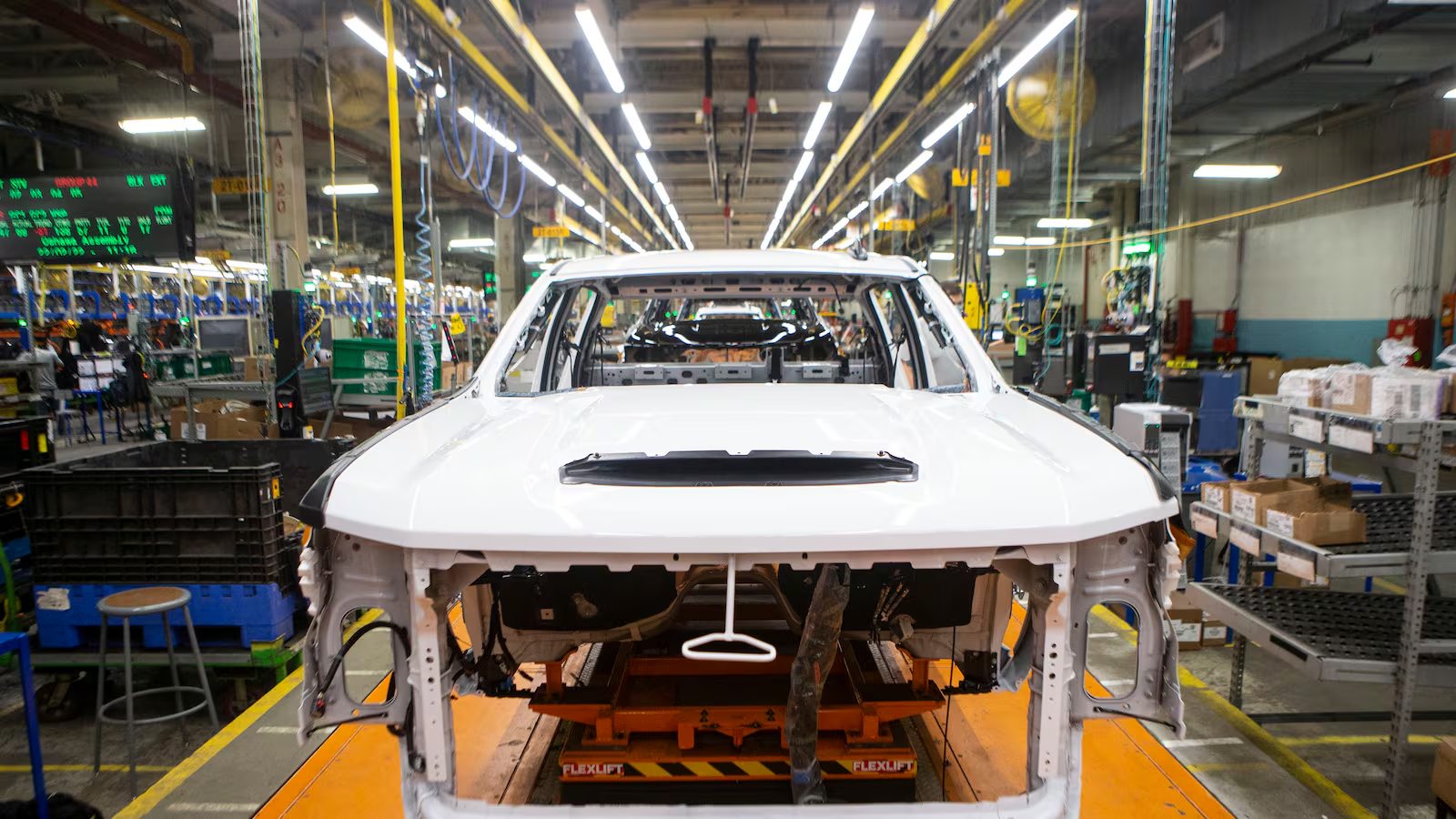
Trump Threatens More Tariffs: “We Don’t Want Your Cars, Canada”
U.S. President Donald Trump has once again turned up the heat on Canada, warning that the 25 per cent tariff already imposed on Canadian automobile imports could increase in the near future. Speaking from the Oval Office on Wednesday, Trump stated bluntly, “I put tariffs on Canada, they are paying 25 per cent but that could go up in terms of cars… We don’t want your cars, in all due respect.”
Earlier this month, Trump’s administration imposed sweeping tariffs on all automobile imports into the United States, with a limited exemption for vehicles built under the Canada-U.S.-Mexico Agreement (CUSMA). Under the deal, only non-American components of vehicles assembled in North America are currently subject to the levies. However, tariffs on those vehicle parts are scheduled to come into full effect by May 3.
The president accused Canada of undermining the U.S. auto industry, saying it has “taken” auto businesses from America. This comes despite a deeply integrated North American auto sector, where vehicle components frequently cross borders before assembly is complete. The long-standing relationship between the U.S. and Canadian auto industries dates back more than a century, including agreements like the 1965 Auto Pact, which fostered cross-border cooperation.
CUSMA, negotiated during Trump’s first term to replace NAFTA, included additional protections for the U.S. auto sector. However, the latest tariffs have rattled the industry, with the Center for Automotive Research in Michigan warning they could cost U.S. automakers $107.7 billion—$41.9 billion of which would directly impact the Big Three: Ford, GM, and Chrysler (now part of Stellantis). Despite ongoing lobbying from those companies, Trump has remained firm that they must bring manufacturing jobs back to the United States.
In response, the Canadian government has adjusted its own retaliatory tariffs. Automakers who maintain vehicle production in Canada will now be permitted to import a set number of U.S.-assembled vehicles tariff-free. However, that number will decrease if the companies reduce investment or production in Canada.
Trump’s trade tensions with Canada come alongside similar actions globally. The U.S. president recently imposed 145 per cent tariffs on Chinese goods, prompting a 125 per cent retaliatory strike from Beijing. Canada was among the first countries hit with steel, aluminum, and fentanyl-related tariffs after Trump’s 2024 re-election, and continues to be a frequent target in his protectionist trade policy.
Despite his aggressive stance, Trump refrained from commenting on Canada’s upcoming federal election but said he has had “very good” conversations with Prime Minister Mark Carney. “He was very, very nice I will say,” Trump remarked. The two leaders spoke last month, and Carney has indicated that Trump agreed to negotiate a new economic and security framework after Canada’s election concludes.
Still, Trump didn’t hold back from taking a jab at Canada, saying the country doesn’t offer anything the U.S. needs and joking that it should “become a U.S. state,” even calling former Prime Minister Justin Trudeau a “governor.” Yet, Trump concluded optimistically, “We’re doing very well. We are working on a deal. We will see what happens.”