

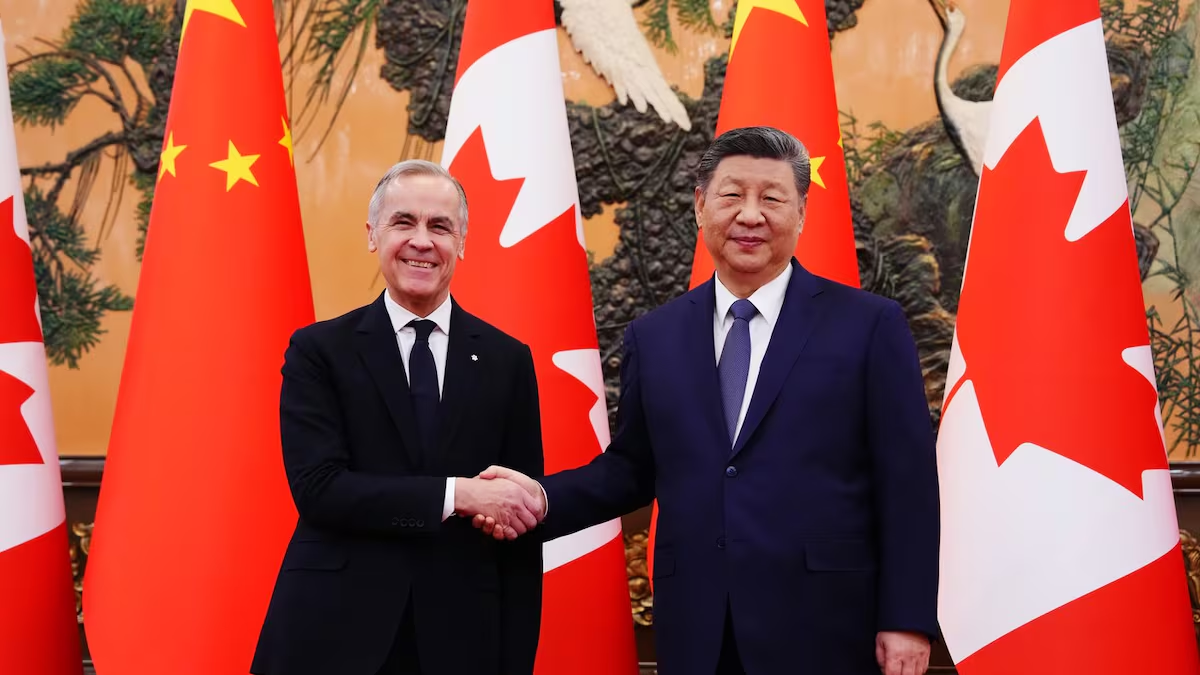
Canada and China have reached a preliminary tariff-quota agreement that will ease trade tensions by lowering duties on Chinese electric vehicles in exchange for reduced tariffs on key Canadian agricultural exports, Prime Minister Mark Carney said Friday.
Under the deal, China will cut tariffs on Canadian canola seed to 15 per cent from as high as 84 per cent by March 1, while removing “anti-discrimination” duties on canola meal, peas, lobsters and crabs through at least the end of the year. Tariffs on canola oil, currently at 100 per cent, were not addressed.
In return, Canada will allow up to 49,000 Chinese electric vehicles per year to enter the market at a reduced tariff of 6.1 per cent, down from 100 per cent. Carney said half of those vehicles will cost under $35,000 by 2030, improving affordability while limiting imports to less than three per cent of Canada’s auto market.
Carney called the agreement “preliminary but landmark,” describing it as a reset in relations following years of escalating trade disputes that began when Ottawa imposed steep EV tariffs under former prime minister Justin Trudeau to protect the domestic auto sector. China retaliated with sweeping duties on Canadian farm products, hitting Prairie producers particularly hard.
The deal follows Carney’s meeting with Chinese President Xi Jinping in Beijing, their first bilateral talks since 2017. Xi described the agreement as a “turnaround” in relations.
Industry groups welcomed the breakthrough, saying it restores access to China for products such as peas and canola ahead of critical planting decisions. Carney said Canada will continue to raise human rights concerns while pursuing what he called a “realistic, interest-based” engagement with Beijing.
The agreement comes as Ottawa works toward its goal of significantly expanding non-U.S. exports by 2030, including increased trade with China.