

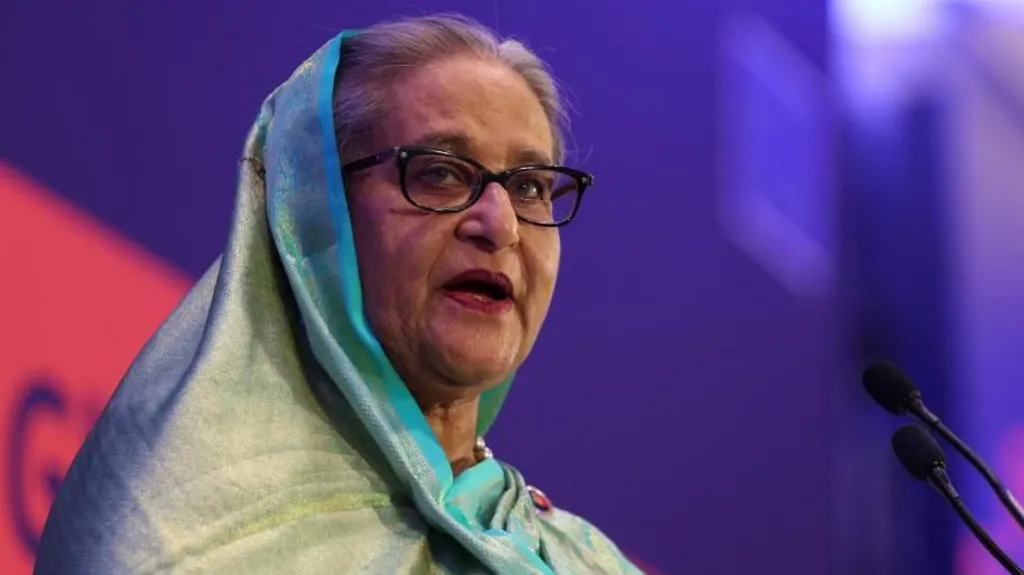
Prosecutors in Bangladesh are demanding the death penalty for former Prime Minister Sheikh Hasina, accusing her of crimes against humanity linked to a violent crackdown on student-led protests that toppled her 15-year rule last year.
Hasina, who fled to India in August 2024, is being tried in absentia. Chief prosecutor Tajul Islam told the court on Thursday that Hasina deserved “1,400 death sentences” — one for each protester killed — but said prosecutors were seeking at least one. “Her goal was to cling to power permanently, for herself and her family. She has turned into a hardened criminal and shows no remorse for the brutality she has committed,” Islam said.
The protests began in July 2024 against civil service job quotas for descendants of veterans from Bangladesh’s 1971 independence war but rapidly escalated into a nationwide movement to unseat Hasina. According to investigators, Hasina instructed security forces to “use lethal weapons” against demonstrators, a claim supported by a leaked audio clip. She has denied all charges.
The unrest was the worst the country had seen since its independence, leaving up to 1,400 people dead in weeks of clashes. On 5 August 2024 — the day Hasina fled Dhaka by helicopter — police killed at least 52 people in a single day, one of the deadliest episodes of state violence in Bangladesh’s history.
Hasina is being tried alongside former interior minister Asaduzzaman Khan Kamal, who is also in hiding, and ex-police chief Chowdhury Abdullah Al-Mamun, who pleaded guilty in July but has yet to be sentenced. Prosecutors have also sought the death penalty for Kamal.
Hasina’s state-appointed defence lawyer argued that police opened fire in response to violent actions by protesters. She has already been sentenced to six months in prison for contempt of court and faces additional corruption charges.
Bangladesh is set to hold its next elections in February, with the opposition BNP emerging as the frontrunner. Hasina’s party, the Awami League, has been banned from all political activities, including contesting the vote — marking a dramatic reversal for the once-dominant leader who ruled the country for a decade and a half.