

Could a Congestion Charge Help Toronto Tackle Gridlock?
Toronto’s traffic woes are a daily struggle for many residents. For University of Toronto student Justin Ha, transit is often the best option, but driving remains unavoidable at times. “There’s always that level of stress that any driver would feel driving at that time of day,” he said. Markham resident Alessandro Sisti, who regularly drives downtown, shares this frustration. “At best I’m resigned to the situation. But I’m often worried about getting somewhere on time,” he said.
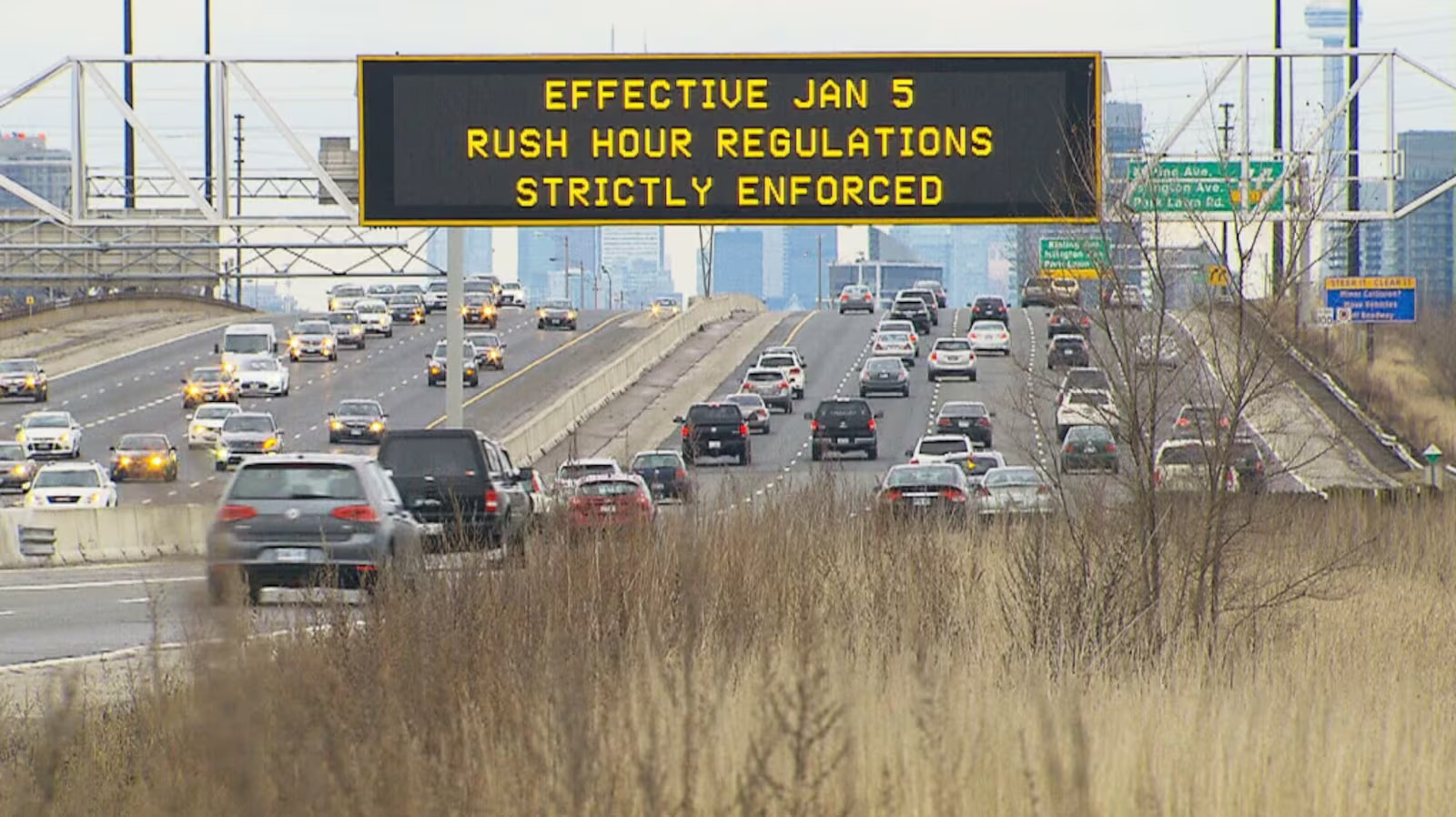
Gridlock is a persistent issue in the GTA, with significant economic and social costs. A 2023 study by the Toronto Region Board of Trade estimated congestion costs the region $11 billion annually, while the Canadian Centre for Economic Analysis pegged the broader impact at $47 billion.
This month, New York City implemented a groundbreaking USD $9 congestion charge for vehicles entering its busiest zones during peak hours, reducing daily traffic by 7.5% and cutting 43,000 cars from its streets. Revenue from the charge is reinvested in transit improvements.
New York joins cities like London, Stockholm, and Singapore in using congestion charges to combat traffic. While these policies often face public resistance initially, they have proven effective in reducing gridlock and improving air quality.
Implementing a congestion charge in Toronto could pose unique challenges. Unlike Manhattan’s island geography with defined entry points, Toronto’s downtown core has numerous access routes.
Professor Matti Siemiatycki, Director of the Infrastructure Institute at the University of Toronto, suggested tolling highways such as the 401, 427, DVP, and Gardiner as an alternative. “Those are where there’s huge congestion,” he said, emphasizing the need for careful economic modeling to avoid harming the downtown core.
Experts agree that effective public transit is a prerequisite for equitable congestion pricing. Toronto’s transit system lags behind global counterparts, both in coverage and efficiency. “It seems overly punitive to tax folks stuck in their cars because they have no other option,” said Coun. Brad Bradford.
Siemiatycki highlighted the need for comprehensive transit improvements, not just downtown but in suburbs like Scarborough, Vaughan, and Mississauga. “It’s going to take dramatic investment to provide real alternatives,” he said.
While a congestion charge might feel like an additional expense, Siemiatycki noted that congestion already imposes significant hidden costs. “Part of the reason Toronto is such a high-cost jurisdiction is because of congestion,” he said, adding that reducing gridlock could yield long-term economic benefits.
Despite political resistance, public sentiment may be shifting. Both Ha and Sisti expressed support for a congestion charge if it reduces travel times. “If people realized how much time they could save, they might see its value,” Sisti said.
While Toronto is not yet poised to implement a congestion charge, New York’s example may prompt a reevaluation of how the city addresses its traffic challenges. Whether through tolls, improved transit, or a combination of measures, the need for action is clear as the GTA’s population and congestion continue to grow.