

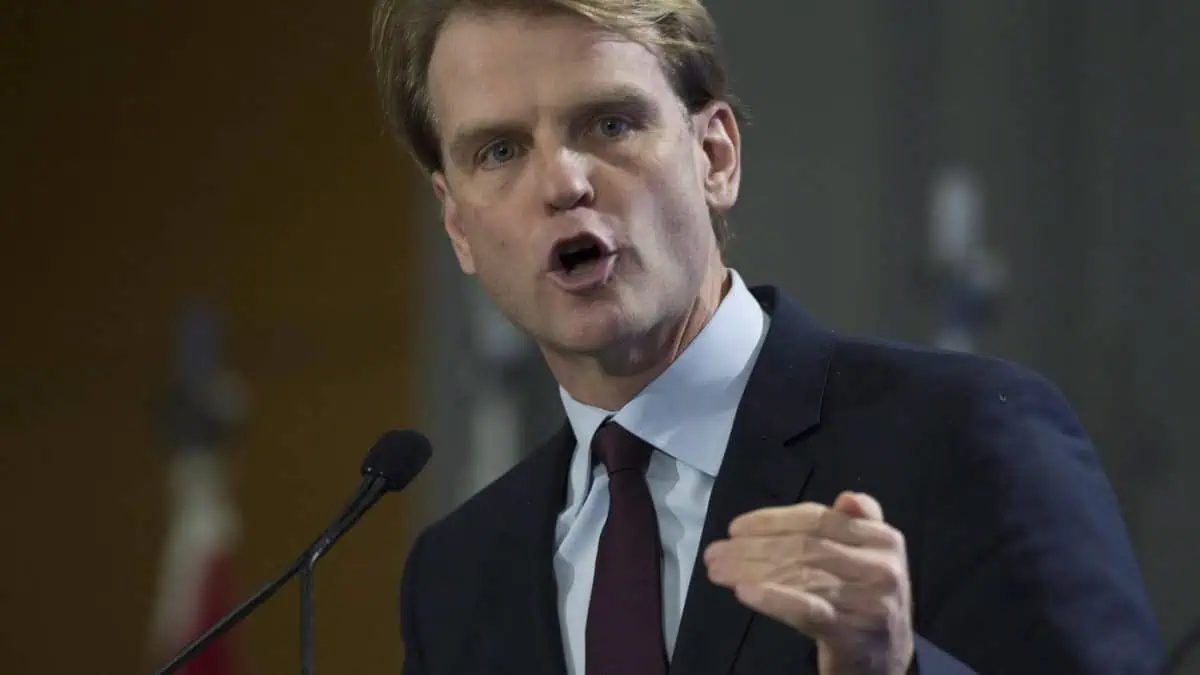
Toronto, July 29: Former federal cabinet minister and career diplomat Chris Alexander has officially entered the race to become Toronto’s next mayor, promising to revitalize the city’s economy, improve transit, address housing challenges and modernize public infrastructure.
Alexander formally registered his campaign on Wednesday, joining a growing field of candidates seeking to lead Canada’s largest city in the municipal election scheduled for October 26, 2026.
In announcing his candidacy, Alexander said Toronto had provided him with countless opportunities throughout his life but argued that the city has lost momentum in recent years.
“A city with this much talent, strength and potential should not be underperforming, and it doesn’t have to be,” Alexander said.
He pledged to provide stronger leadership focused on economic growth, efficient public services and long-term planning.
Experienced Diplomat and Former Cabinet Minister
Born in Toronto, Alexander began his career in Canada’s diplomatic service, spending nearly two decades representing the country abroad.

His postings included service at the Canadian Embassy in Moscow, while from 2003 to 2005 he served as Canada’s Ambassador to Afghanistan. He later became one of the deputy special representatives with the United Nations Assistance Mission in Afghanistan, gaining extensive international diplomatic experience.
Alexander entered federal politics in 2011, winning election as the Conservative Member of Parliament for Ajax–Pickering under Prime Minister Stephen Harper.
In 2013, Harper appointed him Minister of Citizenship and Immigration, where he served until the Conservative government was defeated in the 2015 federal election.
Political Career Included Controversy
During his tenure as immigration minister, Alexander faced criticism over the federal government’s handling of the Syrian refugee crisis, particularly regarding the pace of refugee admissions into Canada.
He also drew controversy after supporting legislation that proposed a public tip line for reporting what the government described as “barbaric cultural practices,” arguing at the time that the measures were intended to protect women and girls from forced marriages and other forms of abuse.
Alexander subsequently lost his parliamentary seat in the newly created riding of Ajax during the 2015 election and later sought the leadership of the Conservative Party, although Andrew Scheer ultimately won that contest.
Return to Public Life
Since leaving federal politics, Alexander has worked as a business executive, strategic adviser and corporate director. He also spent several years living in Kenya before returning to Toronto in 2022.
His campaign says he intends to apply his international experience and public service background to addressing Toronto’s most pressing challenges.
Alexander argues that stronger municipal leadership is essential as cities confront issues including affordability, infrastructure demands, public safety and economic competitiveness.
A Competitive Election Ahead
Alexander joins an increasingly competitive mayoral race that already includes incumbent Mayor Olivia Chow, who is seeking a second term, and Councillor Brad Bradford, who previously contested the 2023 mayoral by-election.
More than a dozen candidates have registered or announced plans to seek the office, making the election one of Toronto’s most closely watched municipal contests in recent years.
Key Issues Facing Voters
The 2026 campaign is expected to focus on several major issues affecting Toronto residents, including housing affordability, public transit, traffic congestion, infrastructure renewal, economic development, public safety and municipal finances.
With experience spanning diplomacy, federal politics and the private sector, Alexander is positioning himself as a candidate capable of bringing strategic leadership and long-term planning to City Hall.
As campaigning intensifies over the coming months, Toronto voters will have the opportunity to compare competing visions for the future of Canada’s largest city before casting their ballots in October.