

Alberta’s Court of Appeal has granted a partial legal victory to the group seeking a referendum on Alberta’s separation from Canada, allowing Elections Alberta to verify the signatures collected on a province-wide petition while the broader constitutional dispute continues before the courts.
Justice Alice Woolley ruled that the petition signatures should be counted, verified and the results made public, stating that delaying the verification process could create practical difficulties if the legal proceedings continue for an extended period. In her written decision, she noted that petition signatories may move, change contact information or pass away over time, potentially affecting the integrity and reliability of the records.
The ruling marks the latest development in an ongoing legal challenge involving Stay Free Alberta, the organization that launched the petition campaign after receiving authorization from Elections Alberta last year. The petition sought to compel the provincial government to consider holding a referendum on Alberta becoming an independent country.
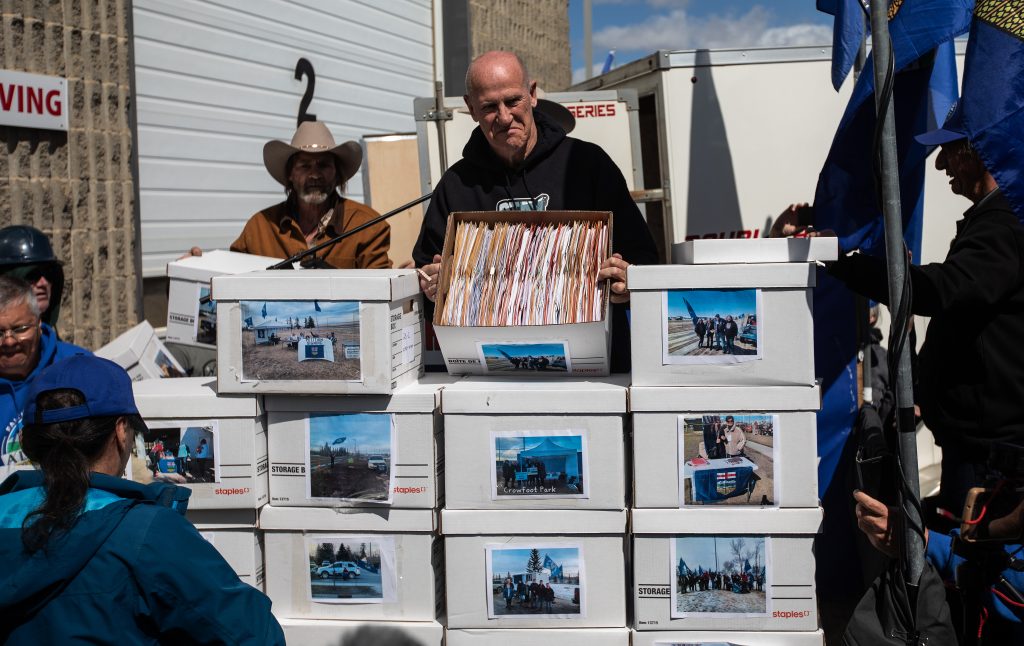
In early May, Stay Free Alberta submitted what it said were nearly 302,000 signatures, well above the approximately 178,000 signatures required under Alberta law to advance a citizen-initiated referendum petition.
However, only weeks later, a court ruled that the petition should not have been authorized because the Alberta government had failed to fulfil its legal duty to consult First Nations on a matter that could affect treaty rights. That decision invalidated the petition, prompting both the provincial government and Stay Free Alberta to file appeals.
Justice Woolley’s latest ruling allows Elections Alberta to proceed with verifying the signatures but stops short of restoring the petition’s legal status. She made it clear that even if the petition contains the required number of valid signatures, it cannot be forwarded to the provincial government for further action until the appeal process has been completed.
The judge also acknowledged concerns surrounding the integrity of the petition process, referring to a previous incident in which a copy of Alberta’s official voters’ list was improperly obtained by individuals associated with the separatist movement. She noted that Elections Alberta’s enhanced verification process is intended to maintain public confidence in the integrity of the petition.
The legal dispute unfolds as Alberta prepares for a province-wide referendum on October 19. Following the earlier court ruling that invalidated the separatist petition, Premier Danielle Smith announced that Albertans would instead vote on whether the province should begin the legal process toward a future binding referendum on separation from Canada. The referendum will also include nine additional questions dealing with immigration and constitutional reform.
Justice Woolley observed that while the government’s proposed referendum question differs from the one sought by Stay Free Alberta, the decision to hold a province-wide vote demonstrates that the petition campaign has influenced the public debate surrounding Alberta’s future within Confederation.
Jeff Rath, legal counsel for Stay Free Alberta, welcomed the court’s decision, describing it as an important victory for democracy in Alberta. He argued that verifying the petition signatures increases pressure on the provincial government to allow Albertans to vote directly on separation rather than on a preliminary question.
The Alberta government also welcomed the decision. A spokesperson for Justice Minister Mickey Amery described the ruling as a positive step while confirming that the government will continue with its planned October referendum pending the outcome of the appeals.
Meanwhile, the Athabasca Chipewyan First Nation, one of several Indigenous communities that successfully challenged the petition in court, said it respects the latest ruling but remains committed to defending the earlier judgment. The First Nation maintains that any attempt to pursue Alberta’s separation must fully respect treaty rights and constitutional obligations to consult Indigenous Peoples.
Under Alberta law, Elections Alberta is required to complete the verification of petition signatures within 21 days. The agency has indicated it is reviewing the Court of Appeal’s decision before proceeding with the verification process.
The outcome of the appeals is expected to have significant implications for Alberta’s constitutional future, Indigenous rights and the province’s ongoing debate over its relationship with the rest of Canada.