

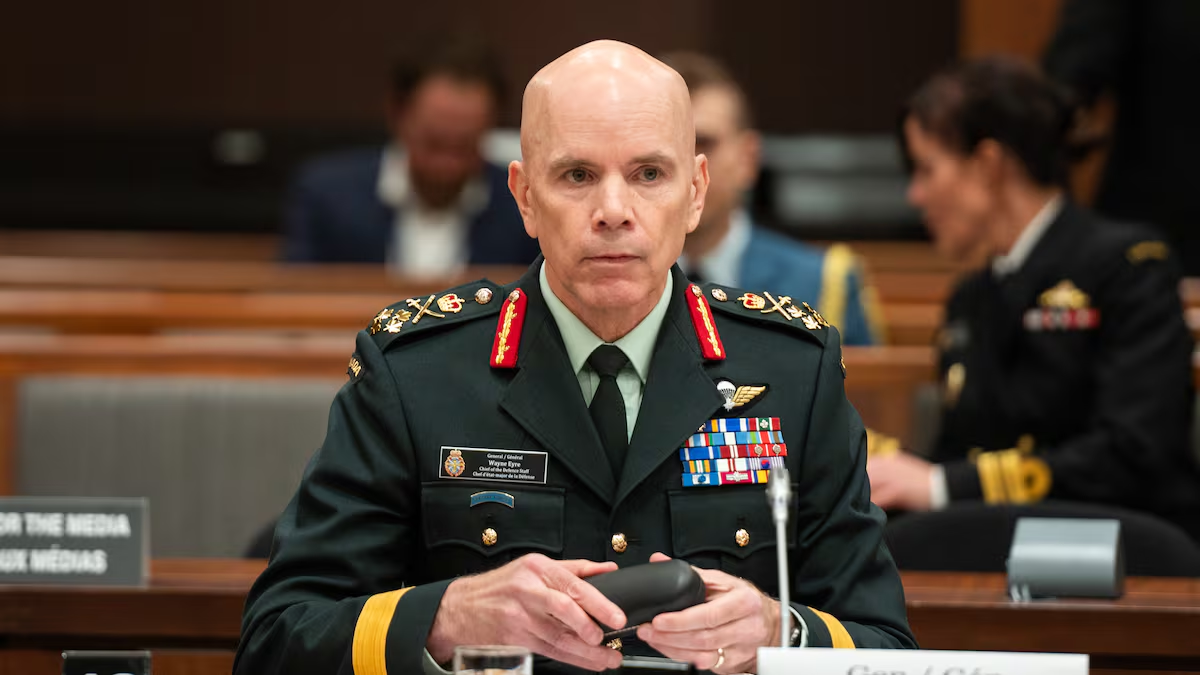
As tensions between Canada and the United States continue over trade disputes, tariffs, and political rhetoric, Canada’s former top military commander is cautioning Canadians against allowing frustration with American politics to damage long-standing relationships between the people of both countries.
Retired General Wayne Eyre has urged Canadians to avoid booing the American national anthem at sporting events, warning that such actions risk alienating ordinary Americans who remain strong friends and allies of Canada.
Speaking during a security and defence discussion at the University of Ottawa, Eyre said Canada must be careful not to undermine relationships that have been built over generations, even as the political relationship between Ottawa and Washington experiences significant challenges.
Eyre argued that while Canada may need to adapt to a more transactional approach from the United States, it should not abandon or damage strategic partnerships that continue to serve both countries. He stressed that Canadians should distinguish between disagreements with political leaders and the broader American population.
His comments come after a series of incidents in which Canadian sports fans booed the U.S. national anthem during professional sporting events. The practice gained momentum following repeated remarks by U.S. President Donald Trump suggesting that Canada should become the 51st American state.
The booing was heard at games involving the Montreal Canadiens, Ottawa Senators, Winnipeg Jets, Toronto Blue Jays, and Toronto Raptors.
One of the most notable incidents occurred during the 2025 4 Nations Face-Off in Montreal, where loud boos greeted the American anthem before a Canada–United States matchup. The highly charged atmosphere contributed to an intense start that saw three fights break out within the opening seconds of the game.
Eyre said such displays of nationalism can have unintended consequences and may damage goodwill among Americans who traditionally view Canada as one of their closest allies.
The former defence chief also addressed the broader state of Canada-U.S. relations. He acknowledged that the relationship is entering a period of uncertainty and suggested that the bilateral partnership may never fully return to what many Canadians previously considered normal.
Recent tensions have included tariff disputes, trade negotiations, and ongoing debate surrounding the future of the Canada-United States-Mexico Agreement. Earlier this week, President Trump stated that he was not inclined to renew the trade pact, arguing that the United States does not need products from Canada or Mexico.
Despite these challenges, Eyre emphasized that geography and shared interests make cooperation between the two countries unavoidable.
He noted that Canada and the United States share the world’s longest undefended border, extensive economic ties, integrated supply chains, and decades of military cooperation through organizations such as North American Aerospace Defense Command and North Atlantic Treaty Organization.
Rather than turning away from Washington, Eyre argued that Canada should focus on making itself an indispensable partner by strengthening its economy, defence capabilities, and strategic importance.
He also cautioned against viewing China as an alternative strategic partner to replace the United States, stressing that Canada’s security and economic future remain closely tied to North America.
In interviews following his speech, Eyre reiterated that while Canada must diversify international relationships and strengthen its sovereignty, it must also recognize the reality of its geography.
“We are neighbours, we share a continent, and that is not going away,” he said.
His remarks arrive at a time when both countries are preparing for important trade discussions and working through one of the most challenging periods in their modern relationship. While political disagreements continue, Eyre’s message is that preserving people-to-people ties and long-standing alliances remains critical to Canada’s future.
As public frustration occasionally spills into sports arenas and public events, the retired general is urging Canadians to remember that diplomatic relationships extend beyond governments and that maintaining mutual respect can help protect one of the world’s most important bilateral partnerships.