

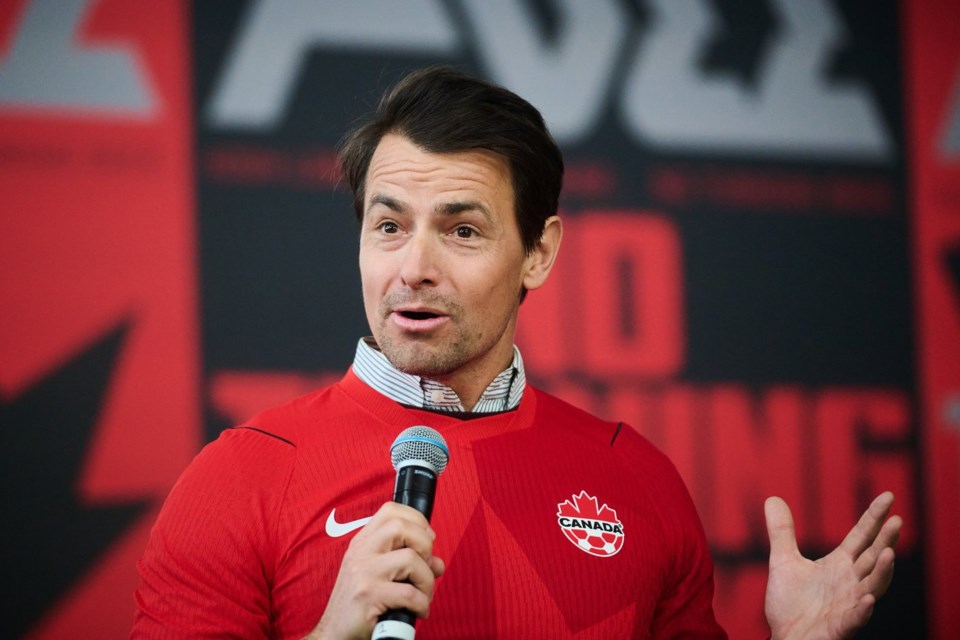
As the FIFA World Cup officially gets underway, Canada’s top sports official is urging Canadians to focus on the opportunities and long-term benefits of hosting the world’s largest sporting event rather than the costs and disruptions that have dominated public debate in recent months.
Adam van Koeverden, a former Olympic gold medalist and the federal government’s point person on sport, says the tournament represents a once-in-a-generation opportunity for Canada and believes public enthusiasm will grow once the matches begin.
Speaking ahead of Canada’s opening World Cup match, van Koeverden said the country is about to experience one of the most significant sporting moments in its history.
Canada is co-hosting the 2026 FIFA World Cup alongside the United States and Mexico. The tournament, which runs until July 19, is the largest World Cup ever staged, featuring 48 teams and 104 matches. Canada will host 13 games, including six in Toronto and seven in Vancouver.
While excitement is building among soccer fans, questions have continued to surface about the public cost of hosting the event. According to recent estimates from the Parliamentary Budget Officer, the federal government’s contribution is expected to total approximately $473 million, while provincial and municipal governments are contributing an additional $593 million.
Despite criticism from some taxpayers and community groups, van Koeverden argued that the spending should be viewed as an investment rather than a cost.
He pointed to improvements made to public infrastructure, including upgrades at BC Place and enhancements to facilities in Toronto. These improvements, he said, will continue benefiting communities long after the final match is played.
The federal minister also highlighted investments in accessibility, venue modernization, security, transportation, and event operations, describing them as part of Canada’s broader legacy as a world-class host of international sporting events.
Recent polling has shown some skepticism among residents of Toronto and Vancouver. An Angus Reid survey released this week found that roughly 70 per cent of respondents in the two host cities questioned whether the public costs justified the disruption associated with hosting the tournament.
Van Koeverden dismissed those concerns as typical of the lead-up to major sporting events. Drawing comparisons to the 2010 Vancouver Winter Olympics, he noted that public concerns before those Games were eventually overshadowed by national pride, volunteer participation, and lasting community benefits.
He said the true value of hosting international events extends beyond medals, match results, or economic statistics. Instead, he emphasized the memories, volunteer experiences, community engagement, and civic pride generated by such occasions.
The minister also encouraged Canadians to participate in the many free activities associated with the tournament. FIFA Fan Festivals, public viewing parties, cultural events, concerts, and community celebrations are taking place not only in Toronto and Vancouver but also in cities and towns across Canada.
While some fans have criticized the high cost of World Cup tickets, van Koeverden noted that ticket pricing is determined by FIFA rather than the Canadian government. He acknowledged that attending matches can be expensive but argued that prices are comparable to other major global sporting events such as the NBA Finals or World Series.
To help improve accessibility, the federal government purchased 5,000 tickets for youth and families to attend pre-tournament Canadian matches held in Montreal, Toronto, and Edmonton.
The economic impact of the tournament remains a subject of debate. Reports have suggested hotel bookings in host cities have been slower than initially projected. However, van Koeverden believes the broader hospitality and tourism sectors will benefit significantly as fans gather in restaurants, bars, public squares, and entertainment districts throughout the competition.
He predicts that patios, restaurants, and local businesses will see increased activity during the six-week event as visitors and residents come together to celebrate the World Cup atmosphere.
Support for hosting the tournament is not limited to government circles. Conservative MP Richard Martel also acknowledged the benefits that major international sporting events can bring to host countries, although he expressed concern about the affordability of tickets for many Canadians.
As Canada prepares to host the world, van Koeverden’s message is straightforward: enjoy the moment.
With millions of viewers watching globally, thousands of international visitors arriving, and Canadian soccer reaching new heights, he believes the World Cup offers an opportunity to showcase the country’s diversity, hospitality, and passion for sport.
For the next several weeks, Canada will be at the centre of the football world—and according to Ottawa’s sports minister, it is a moment worth celebrating rather than debating