

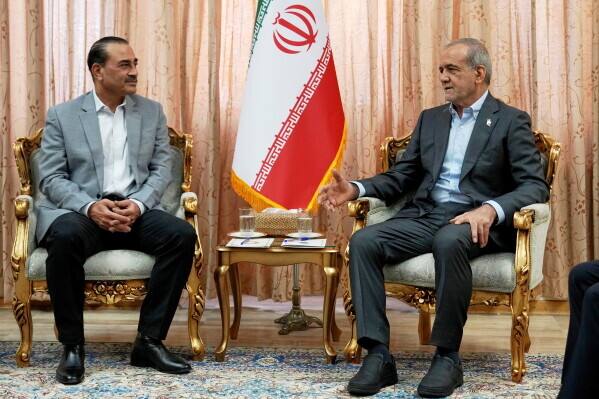
Fresh uncertainty continues to surround rapidly evolving negotiations between Iran and the United States after Iranian officials pushed back against suggestions that a breakthrough agreement could be imminent, even as diplomatic momentum appears to be growing behind the scenes.
Speaking in Tehran on Monday, Iranian Foreign Ministry spokesman Esmail Baqai acknowledged that significant progress has been made in ongoing discussions with Washington, but stressed that no final agreement is yet within reach.
According to Baqai, negotiators have managed to settle many major issues currently under discussion, but he cautioned against interpreting the recent developments as a sign that a formal deal is about to be signed.
The comments came shortly after U.S. Secretary of State Marco Rubio indicated during a visit to New Delhi that negotiators had hoped to announce progress as early as Sunday night, adding that news could still emerge soon.
Rubio, however, also warned observers not to “read too much into it,” suggesting that communication delays on the Iranian side were slowing the process.
Reports emerging from U.S. media indicate that a preliminary memorandum of understanding is currently under discussion. The proposed framework reportedly includes a 60-day extension of the ceasefire, the reopening of the strategically vital Strait of Hormuz and further negotiations over Iran’s nuclear activities.
The Strait of Hormuz remains one of the world’s most critical energy corridors, with roughly 20 per cent of global oil and liquefied natural gas shipments passing through the narrow waterway. Iran’s effective blockade of the route earlier this year sent shockwaves through global energy markets and intensified fears of a wider regional conflict.
The broader crisis erupted after the United States and Israel launched large-scale strikes against Iranian targets in late February, triggering a dangerous escalation across the Middle East. Iran retaliated by launching attacks against Israel and U.S.-allied Gulf states while also restricting access through the Strait of Hormuz.
Although a ceasefire was eventually reached in early April, tensions have remained high. The United States subsequently imposed a blockade on Iranian ports, with President Donald Trump insisting the measures would remain in place until a formal and verifiable agreement is signed.
Trump has recently signaled cautious optimism about the negotiations, though he also publicly instructed negotiators not to rush into an agreement. He reiterated that Iran must never be allowed to develop nuclear weapons, while Tehran continues to insist its nuclear program is intended solely for peaceful purposes.
Reports suggest one of the most sensitive areas under negotiation involves Iran’s highly enriched uranium stockpile. Prior to the conflict, Iran was believed to possess approximately 440 kilograms of uranium enriched to 60 per cent purity — technically only a short step away from weapons-grade levels required for a nuclear bomb.
Iranian President Masoud Pezeshkian has publicly stated that Iran is willing to assure the international community that it is not seeking nuclear weapons.
Despite the diplomatic movement, major disagreements reportedly remain unresolved, including the scope of sanctions relief, the release of frozen Iranian assets, and the long-term limits Washington wants imposed on Iran’s nuclear activities.
The potential agreement is also exposing growing divisions within Trump’s Republican base. Several influential Republican senators have sharply criticized any proposal they view as too lenient toward Iran.
Ted Cruz described the possible arrangement as a “disastrous mistake,” while Roger Wicker warned that a temporary ceasefire could undermine the strategic objectives achieved during recent military operations.
Meanwhile, longtime Trump ally Lindsey Graham questioned whether a deal that leaves Iran regionally influential would defeat the original purpose of the conflict.
Trump responded forcefully to critics inside his own party, dismissing them as “losers” and insisting that any agreement with Iran would either be “great and meaningful” or there would be no deal at all.
Global financial markets are already reacting to the possibility of reduced tensions. Oil prices dropped sharply Monday while Asian stock markets rose amid hopes that a breakthrough could eventually stabilize energy supplies and reduce fears of further military escalation in the region.
However, shipping and logistics experts caution that even if an agreement is reached, the global supply chain disruption caused by months of conflict and uncertainty may take considerable time to normalize. Industry leaders say companies are likely to remain cautious before fully restoring pre-crisis shipping operations through the Strait of Hormuz.