

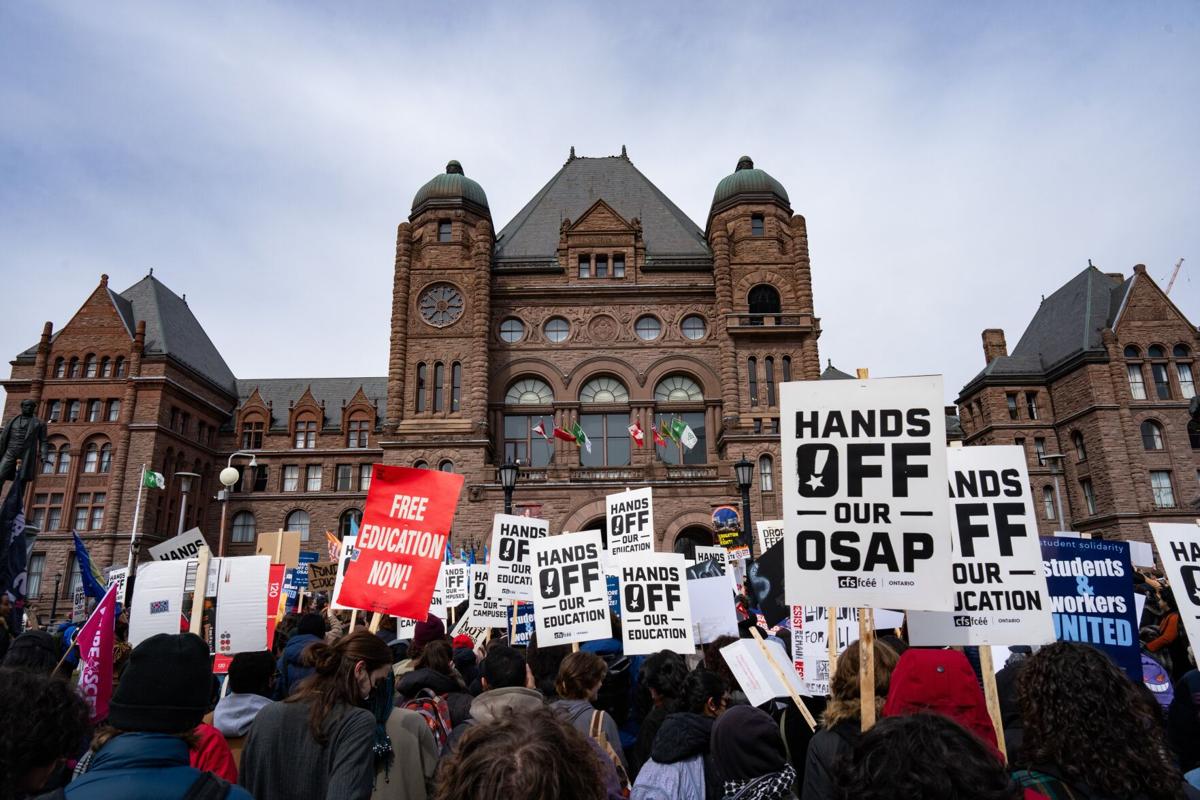
Newly released Ontario government records are raising fresh questions about the scale of alleged abuse within the Ontario Student Assistance Program after Premier Doug Ford cited misuse of student aid as one reason for major changes to the program.
According to documents obtained through a freedom-of-information request, approximately $13.1 million in student aid over two years was issued to students later determined to be ineligible.
The records show:
- $4.7 million in ineligible aid in 2024
- $8.3 million in ineligible aid in 2025
The funding involved cases linked to false or invalid information, incorrect student status, participation in non-bona fide studies and other eligibility discrepancies.
However, the amounts represent less than one per cent of overall OSAP funding distributed during that period.

In the 2024–25 fiscal year alone, Ontario provided approximately:
- $1.7 billion in OSAP grants
- $301 million in student loans
- Financial assistance to roughly 473,000 students
Despite hundreds of investigations, the records also show that no cases were referred to police as criminal fraud matters.
The province investigated:
- 879 cases in 2024
- 909 cases in 2025
Of those investigations, 530 cases were considered serious enough to trigger immediate repayment demands and restrictions on future OSAP eligibility until debts were repaid.
The Ontario government maintains that protecting the integrity of the program remains a priority.
Bianca Giacoboni, spokesperson for Colleges and Universities Minister Nolan Quinn, said misuse of public funding is unacceptable.
“We have a robust framework in place to protect OSAP from fraudulent use, and we are implementing new technology and exploring other avenues to strengthen the program’s integrity,” she said.
The debate intensified earlier this year when the Ford government announced major reforms to OSAP as part of a broader post-secondary funding overhaul.
The changes include shifting the program away from a grant-heavy model toward one where roughly three-quarters of aid will now be issued as repayable loans.
The province said the changes are needed to ensure the long-term sustainability of the program, particularly after rising enrollment and increased costs.
Shortly after the announcement, Ford publicly cited stories of students allegedly misusing OSAP money on luxury purchases.
“I’ve heard some nightmare stories,” Ford said at the time, referring to reports of students allegedly buying expensive watches, cologne and other non-essential items using student aid funds.
Critics, however, argue the newly released data does not support the narrative of widespread abuse.
Peggy Sattler, the New Democratic Party’s critic for colleges and universities, questioned why isolated cases were being used to justify broader funding cuts.
“Why is the premier making these suggestions that abuse of OSAP is rampant?” Sattler asked. “This data does not support that.”
Student organizations are also warning that the changes could increase financial pressure on low- and middle-income students already struggling with rising living costs and uncertain job prospects.
Cyrielle Ngeleka argued the policy shift places a heavier debt burden on students.
“What students are seeing is a government using a very limited number of cases to rationalize broader austerity measures in post-secondary education,” she said.
The records also reveal that Ontario investigators are increasingly facing challenges linked to online learning, digital document fraud, AI-assisted document manipulation and complicated immigration or residency verification issues.
While the province says stronger safeguards are necessary, the newly disclosed figures are likely to fuel further debate over whether the Ford government’s overhaul of student financial assistance was proportionate to the actual scale of misuse uncovered within the system.