

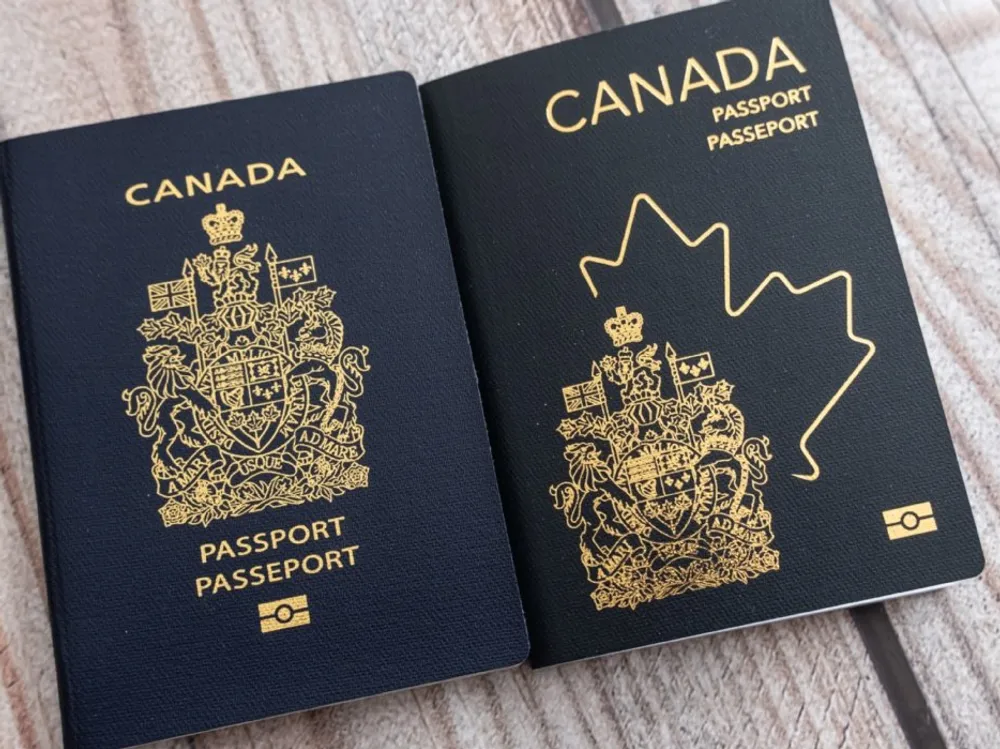
A major change to Canada’s citizenship law is creating new opportunities for hundreds of thousands of Americans with Canadian ancestry — including nearly 300,000 residents in Connecticut who may now qualify for Canadian citizenship and a Canadian passport through family lineage.
The updated rules under Immigration, Refugees and Citizenship Canada came into effect on Dec. 15, 2025, after Canada removed the long-standing generational limit on citizenship by descent for individuals born before that date.
Under the revised law, Americans may now claim Canadian citizenship if they can trace a direct ancestral line back to a Canadian-born relative — even if that ancestor is several generations removed.
Historic Migration Behind Connecticut’s Canadian Roots
Experts estimate that roughly nine per cent of current residents in Connecticut have Canadian ancestry, largely tied to the historic migration of French Canadians from Quebec to New England between the mid-1800s and early 1900s.
The migration wave, known as “La Grande Saignée” or “The Great Hemorrhage,” saw nearly 900,000 French Canadians leave Quebec in search of work opportunities in the northeastern United States.
By the early 20th century, tens of thousands of French Canadians had settled in Connecticut, creating generations of descendants who may now be eligible for dual citizenship.
What Americans Need to Apply
Eligible Americans are already considered dual citizens under the new law, but they must first apply for official proof of Canadian citizenship before obtaining a passport.
Applicants typically need to provide documents proving their ancestry, including birth certificates, marriage records, baptismal certificates and other historical records connecting them to a Canadian ancestor.
Many applications involve retrieving records from Quebec’s national archives, Bibliothèque et Archives nationales du Québec, which has reportedly seen a dramatic spike in requests following the law change.
Current processing times for proof of citizenship applications are approximately 10 months.
Why Interest Is Growing
Many Americans pursuing Canadian citizenship say they are not immediately planning to relocate, but want the flexibility and security of holding a second passport.
A Canadian passport provides visa-free or simplified travel access to many countries and currently ranks among the world’s strongest travel documents.
Dual citizens can also live and work freely in both Canada and the United States and may access Canadian healthcare and social services if they establish residency in Canada.
The updated law has triggered growing interest across New England states with strong French-Canadian roots, including Vermont, New Hampshire, Maine and Massachusetts.
Importantly, experts note that obtaining Canadian citizenship does not automatically create additional Canadian tax obligations unless the individual becomes a Canadian resident or develops significant financial ties to Canada.
Immigration lawyers and genealogical researchers say interest from Americans seeking proof of Canadian citizenship has surged since the rule changes took effect late last year.