

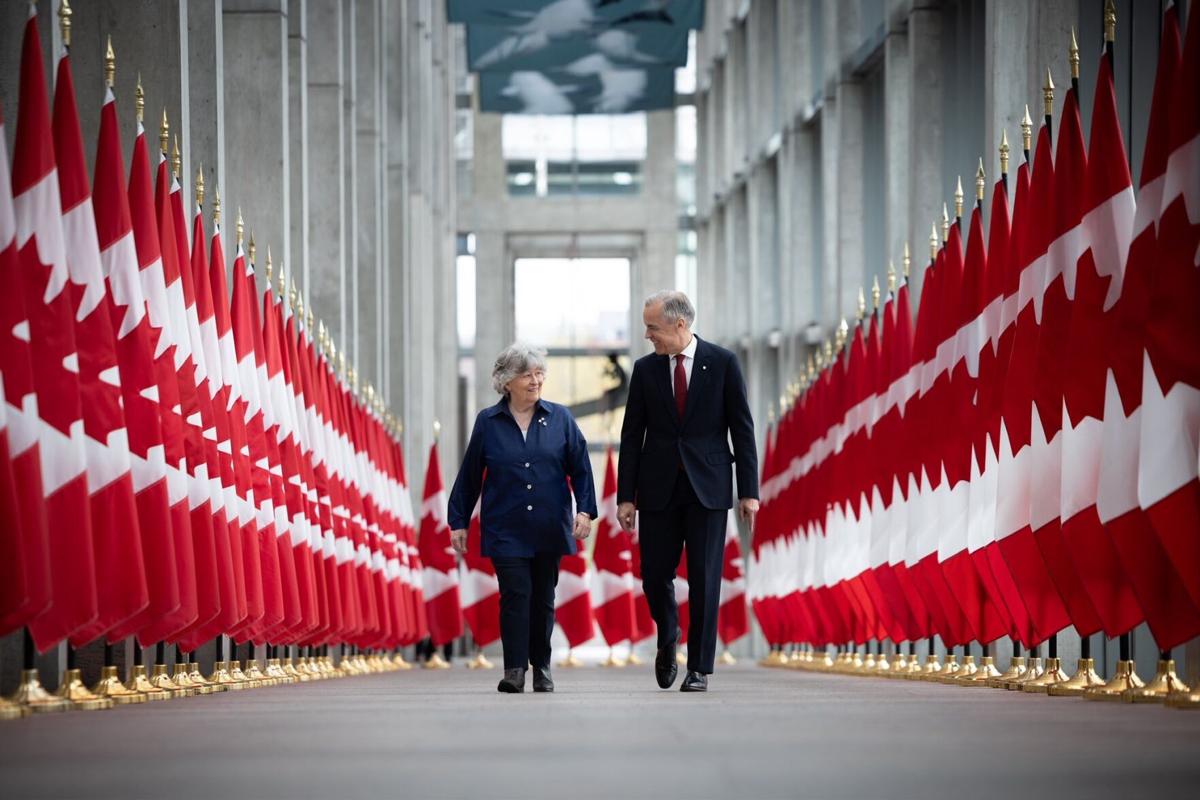
Prime Minister Mark Carney has selected Louise Arbour as Canada’s next Governor General, marking a historic appointment of one of the country’s most respected legal and international human rights figures.
Arbour, 79, will replace Mary Simon when her five-year term expires in July. In announcing the appointment, Prime Minister Carney confirmed that King Charles III accepted his recommendation for Arbour to become Canada’s 31st Governor General.
Carney praised Arbour’s decades of public service, describing her as a leader who has consistently defended justice, human rights and democratic values both in Canada and internationally.
Born in Montreal, Arbour was called to the Québec Bar in 1971 and later to the Ontario Bar in 1977. Her distinguished legal career began with her appointment to the Ontario Superior Court of Justice in 1987, followed by service on the Ontario Court of Appeal.
Internationally, Arbour gained recognition as chief prosecutor for the International Criminal Tribunals for the former Yugoslavia and Rwanda between 1996 and 1999, where she played a major role in prosecuting war crimes and crimes against humanity, including the indictment of former Serbian President Slobodan Milošević.
In 1999, she was appointed to the Supreme Court of Canada, where she served until 2004 and contributed to several landmark constitutional and criminal law decisions. Over the years, she has received 42 honorary doctorates and was named a Companion of the Order of Canada.
In Brampton, Louise Arbour Secondary School was named in her honour in recognition of her international leadership and contributions to justice and human rights.
The Governor General serves as the official representative of the King in Canada and carries out many constitutional and ceremonial duties on behalf of the Crown. The role includes granting royal assent to legislation passed by Parliament, summoning and dissolving Parliament, appointing senators, and formally inviting a political leader to form government after elections.
The office also plays an important symbolic role in representing national unity, recognizing achievement and supporting community initiatives across the country.
While the Governor General usually acts on the advice of the prime minister, the position can exercise limited discretionary powers during constitutional or political uncertainty, particularly in minority government situations.
Arbour’s appointment comes as Canada continues to navigate important national and international challenges, with many observers viewing her legal expertise, diplomatic experience and global reputation as qualities well suited to the country’s highest constitutional office.