

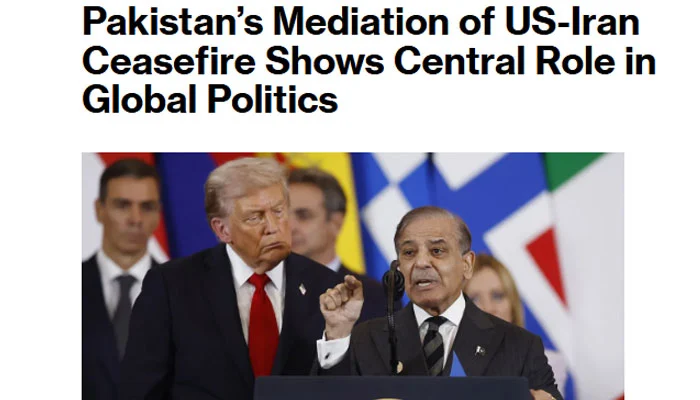
Pakistan has drawn significant international attention after playing a central role in brokering a temporary ceasefire between the United States and Iran, just hours before a critical deadline set by Donald Trump. The agreement, which pauses hostilities for two weeks, followed urgent diplomatic efforts led by Shehbaz Sharif and military leadership under Asim Munir.
The breakthrough came after Pakistan urged Washington to extend its deadline for military escalation, allowing space for dialogue and negotiation. The move marked a sharp shift from earlier rhetoric, as tensions had escalated with warnings of severe consequences if a deal was not reached. Pakistan has since invited delegations from both countries to Islamabad for further negotiations aimed at reaching a long-term resolution to the conflict.
Global media outlets have widely acknowledged Pakistan’s diplomatic efforts, highlighting its strategic position as a country maintaining working relationships with both Washington and Tehran. Analysts noted that this unique positioning enabled Islamabad to facilitate communication channels that had otherwise remained closed, allowing both sides to step back from immediate escalation.
International coverage has also pointed out that Pakistan’s involvement was driven by both geopolitical and economic considerations. With the Strait of Hormuz playing a critical role in global energy supply, disruptions caused by the conflict had significant implications for countries dependent on oil and gas imports, including Pakistan. The mediation effort is being viewed not only as a step toward regional stability but also as a move that enhances Pakistan’s global diplomatic standing.
Observers suggest that Pakistan’s role in securing the ceasefire represents a notable shift from being a peripheral player to an active intermediary in high-stakes international diplomacy. While challenges remain and the ceasefire remains fragile, the development has been described as a significant diplomatic achievement, demonstrating the impact of strategic engagement and balanced foreign relations.
The coming days will be crucial as negotiations continue, with Pakistan positioned at the centre of efforts to transform the temporary ceasefire into a more durable peace agreement.