

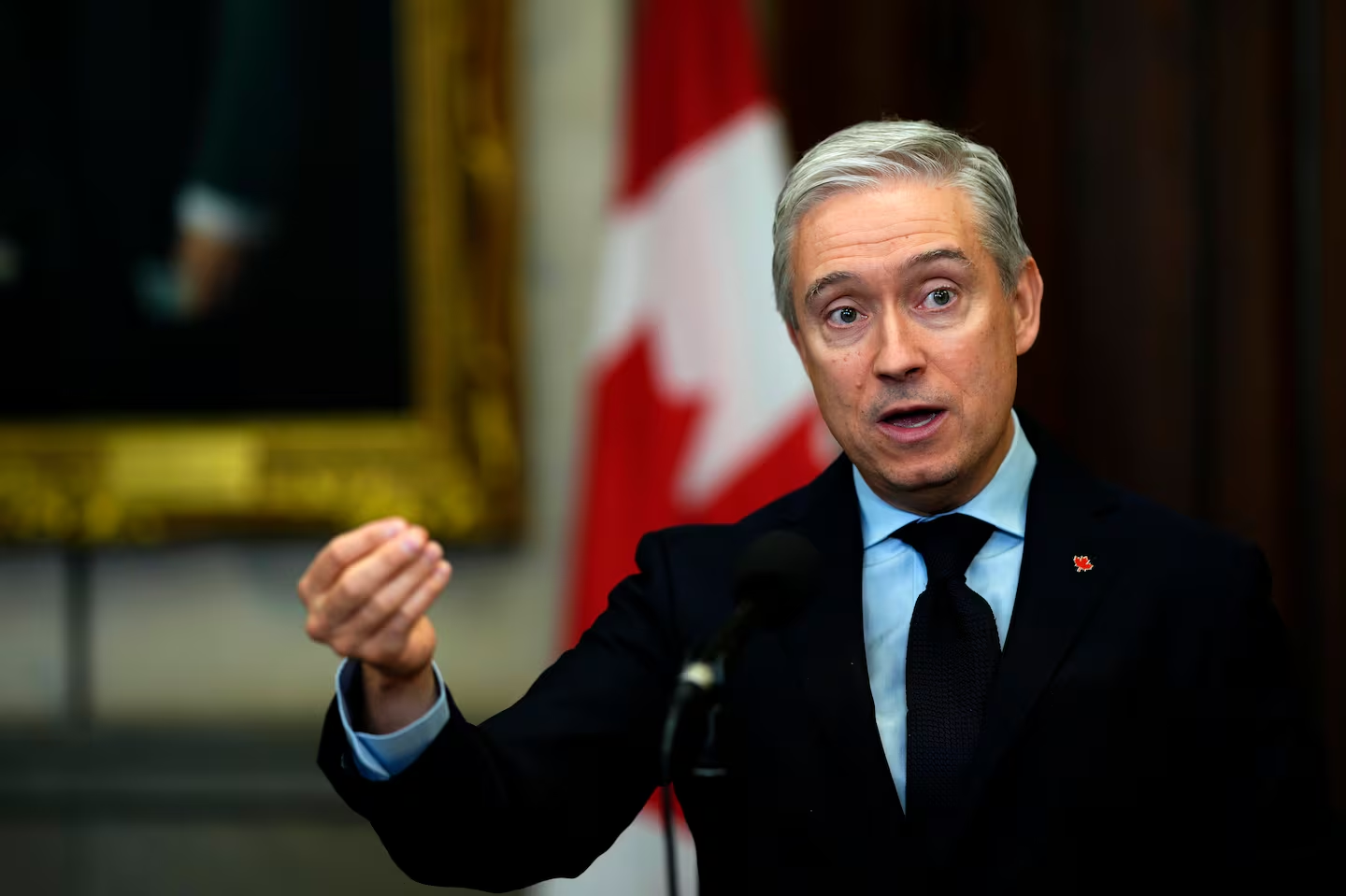
Finance Minister François-Philippe Champagne says Ottawa’s upcoming budget will include plans to shrink Canada’s federal bureaucracy, warning that the public service has grown “too large” since the pandemic and must return to “sustainable levels.”
Speaking to reporters Wednesday, Champagne confirmed that the government is pursuing “workforce adjustments” and “efficiencies” to better align staffing with what he called the “real needs of Canadians.”
“We need to bring back the civil service to a sustainable level,” he said. “If you look at how many people we have today and what we had before COVID-19, we need to get back to something more sustainable.”
According to Treasury Board data, the federal public service now employs 357,965 people, a 24% increase from 2019. While the workforce shrank by about 10,000 employees this year compared to 2024, personnel spending rose by $1.5 billion, according to the Parliamentary Budget Officer (PBO).
Champagne pledged that the government would be “transparent and compassionate” in managing any reductions. Sources told CTV News the budget may include early-retirement incentives and natural attrition to achieve savings.

Balancing austerity and investment
The moves come as Prime Minister Mark Carney’s government prepares a November 4 budget that he has described as a mix of “investment and austerity.” Ministers have been asked to find 7.5% in savings for 2026-27, 10% for 2027-28, and 15% for 2028-29.
Carney has said the fiscal plan will include “generational investments” to modernize the economy but warned Canadians that transformation will “take some sacrifices.” Champagne echoed that message: “Yes, we have to make tough choices … but that allows us to prioritize and invest where it makes a difference.”
Pushback from unions and analysts
Public service unions reacted sharply. Gina Gratten of the Public Service Alliance of Canada (PSAC) warned that cutting “tens of thousands” of jobs while the population is growing and aging would mean “more workers, families, veterans, and elderly people will go without the critical services they rely on.”
Budget watchdog Jason Jacques, interim PBO, noted that attrition alone is unlikely to meet the government’s ambitious savings goals. “It would be highly unlikely that you’d be able to reach a number that big without reductions in personnel costs,” he said.
This will be Carney’s first budget as prime minister — and his first confidence vote. The minority Liberals, three seats short of a majority, will need support from another party to pass it.
Despite the uncertainty, Champagne promised a clear vision: “We will own these choices, and Canadians can judge us for that.”