

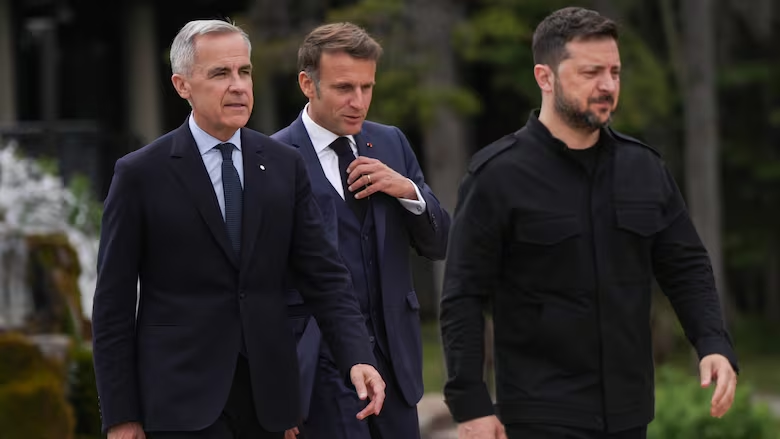
In a move poised to reshape Canada’s defence posture, Prime Minister Mark Carney signed a landmark strategic defence and security partnership with the European Union on Monday, signaling a shift toward deeper military and industrial collaboration beyond traditional U.S. alliances.
The agreement gives Canadian firms potential access to Europe’s ambitious $1.25-trillion ReArm Europe program, designed to boost defence capabilities, improve resilience, and reduce reliance on U.S. military equipment—a long-standing concern for Canadian policymakers.
“This partnership reflects our commitment to strengthening Canada’s sovereignty, modernizing our defence industry, and working closely with trusted allies in a more uncertain world,” Carney said during his visit to Brussels.
The deal follows similar agreements struck by the United Kingdom and Australia, and paves the way for Canadian involvement in joint procurement initiatives like SAFE — a European loan program that helps smaller nations buy military gear at reduced rates. While Canada is unlikely to qualify for SAFE loans directly, its participation may be influential in supporting partner countries such as Ukraine, which already benefits from the program.
Canada’s agreement is not meant to replace its role in NATO, but rather to complement it, according to analysts. In the wake of growing geopolitical uncertainty—particularly about the United States’ future commitment to NATO under a possible second Trump administration—European allies have been eager to expand bilateral and multilateral defence ties.
“It makes sense to work with the Europeans as much as we can,” said Stephen Saideman, chair of international affairs at Carleton University. “If the U.S. pulls back, NATO might survive through deeper cooperation like this.”
The U.K.-EU deal signed in May focused not only on procurement but also classified intelligence sharing, cybersecurity, and crisis management coordination—raising questions about whether Canada’s pact will follow suit. Like the U.K., Canada is part of the Five Eyes intelligence network, and enhanced EU ties could signal deeper information-sharing protocols between Europe and North America.
Following the signing, Carney will head to The Hague for the NATO summit, where member countries will debate raising defence spending benchmarks to a combined 5% of GDP—including 3.5% for direct military funding and 1.5% for infrastructure.
Carney has already pledged that Canada will meet the long-standing 2% NATO target by March 2026, amid a broad military modernization push that includes major procurement projects and expanded cyber capabilities.
“This isn’t just about new equipment,” said Christian Leuprecht of the Royal Military College of Canada. “This is about integrating our defence posture with trusted partners who share our democratic values, and who understand the threats facing our world today.”
While Canada may not have direct access to EU defence loans, the country stands to gain considerably through industrial cooperation, shared research and development, and collective purchasing—elements that may help reduce costs and deliver long-term strategic advantages.
As global security tensions continue to mount, Canada’s strategic realignment with Europe signals a more diversified and proactive approach to defending its interests—both at home and on the world stage.