

U.S. President Donald Trump has announced a sweeping new travel ban that bars citizens from 12 countries and imposes restrictions on individuals from seven more, citing national security concerns. The move marks a dramatic expansion of his controversial immigration policies and echoes the “Muslim ban” that defined the early days of his first term. The new order primarily impacts individuals from Africa and the Middle East and is set to take effect Monday at 12:01 a.m., with no specified end date.
The countries now facing a full ban include Afghanistan, Myanmar, Chad, the Republic of Congo, Equatorial Guinea, Eritrea, Haiti, Iran, Libya, Somalia, Sudan, and Yemen. Meanwhile, people from Burundi, Cuba, Laos, Sierra Leone, Togo, Turkmenistan, and Venezuela will face heightened restrictions unless they already hold valid U.S. visas.
Trump justified the new policy through an executive order issued in January, which directed top security agencies to evaluate “hostile attitudes” toward the U.S. and recommend actions. In a social media video, he referenced a recent terror attack in Boulder, Colorado, to bolster the policy’s necessity, despite the attacker’s country of origin—Egypt—not being on the banned list.
There are several exemptions, including for U.S. green card holders, dual citizens, diplomats, athletes participating in major sporting events, UN representatives, refugees admitted prior to the ban, and certain Afghans and Iranians facing persecution. Families applying for visas for spouses, children, or parents may also be exempt.
Trump claimed the targeted countries either pose a “public safety risk,” fail to properly vet their citizens, or historically refuse to take back nationals who overstay visas. He pointed to Homeland Security data highlighting high rates of overstayed visas as justification, declaring, “We don’t want them.”
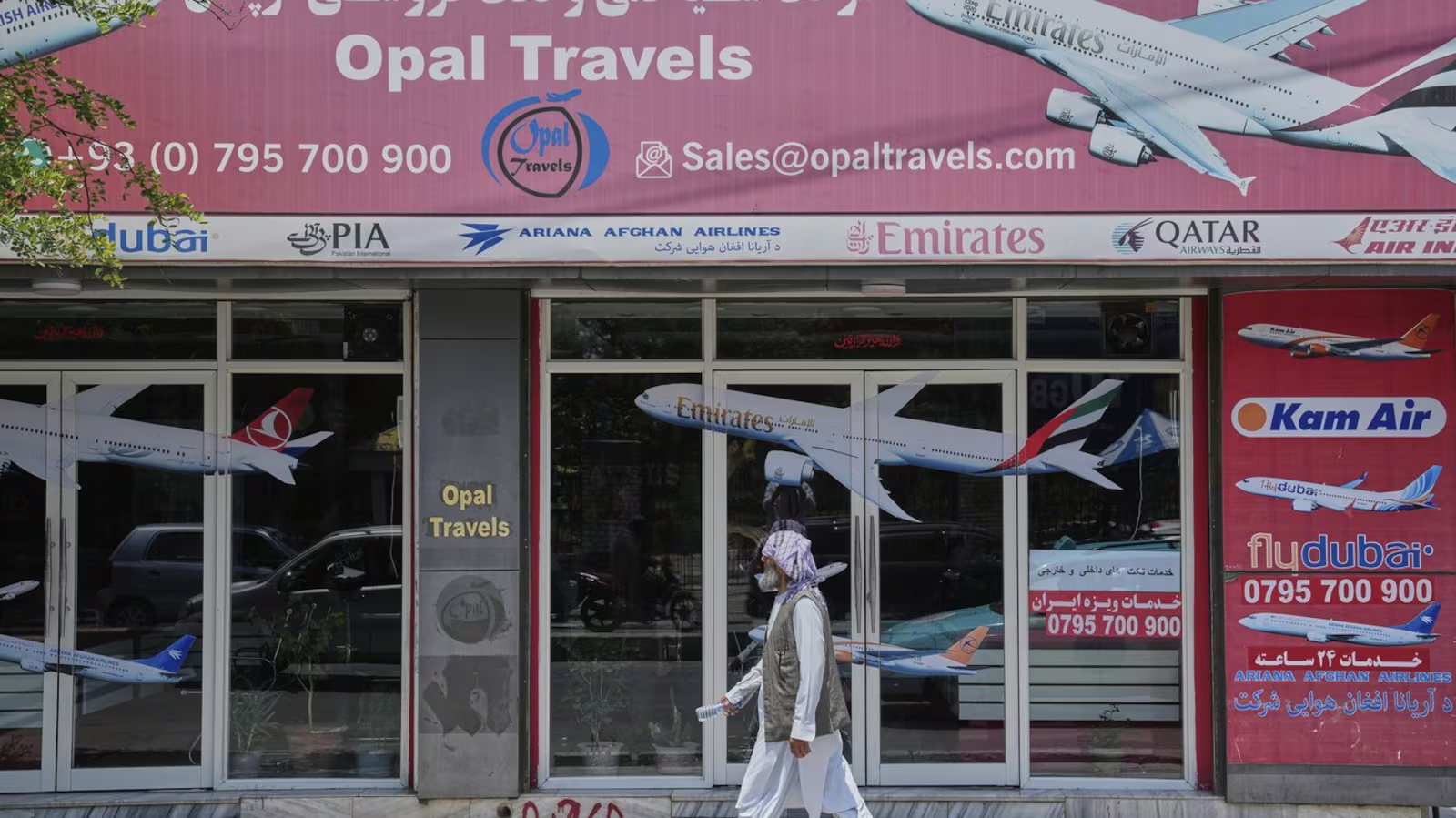
The inclusion of Afghanistan has drawn particular criticism, especially from those who helped U.S. forces during the two-decade war. Though the administration carved out exceptions for Afghans holding special immigrant visas, many in the resettlement community remain alarmed. The administration said countries may be removed from the ban if they “materially improve” their vetting procedures, while new countries could be added if fresh threats emerge.
The announcement sparked swift and widespread backlash from international leaders, civil rights groups, and immigrant communities. Venezuela’s government condemned the move as a discriminatory attack, while Chad responded by suspending visas for U.S. citizens. Groups such as Oxfam and the Council on American-Islamic Relations denounced the ban as racially motivated and ideologically driven. The National Immigration Law Center called it “deeply racialized,” warning it would disproportionately impact Black and Brown people.
Public response varied. In Haiti, radio stations fielded outraged calls from Haitians accusing Trump of racism. In Miami, restaurant owner Wilkinson Sejour warned that the ban would hurt his Haitian-centered business and community. Meanwhile, in Little Havana, some Cuban-Americans voiced support, arguing the ban would deter those aligned with the Cuban regime from entering the U.S.
Trump’s new travel ban also invites comparison to his original 2017 executive order, which barred travelers from several Muslim-majority nations. That action triggered chaos at airports and widespread protests, until a revised version was ultimately upheld by the U.S. Supreme Court in 2018. The new policy is broader in scope, affecting not just visitors but also immigrants, and once again placing the U.S. at the center of a heated global debate over immigration, security, and discrimination.