

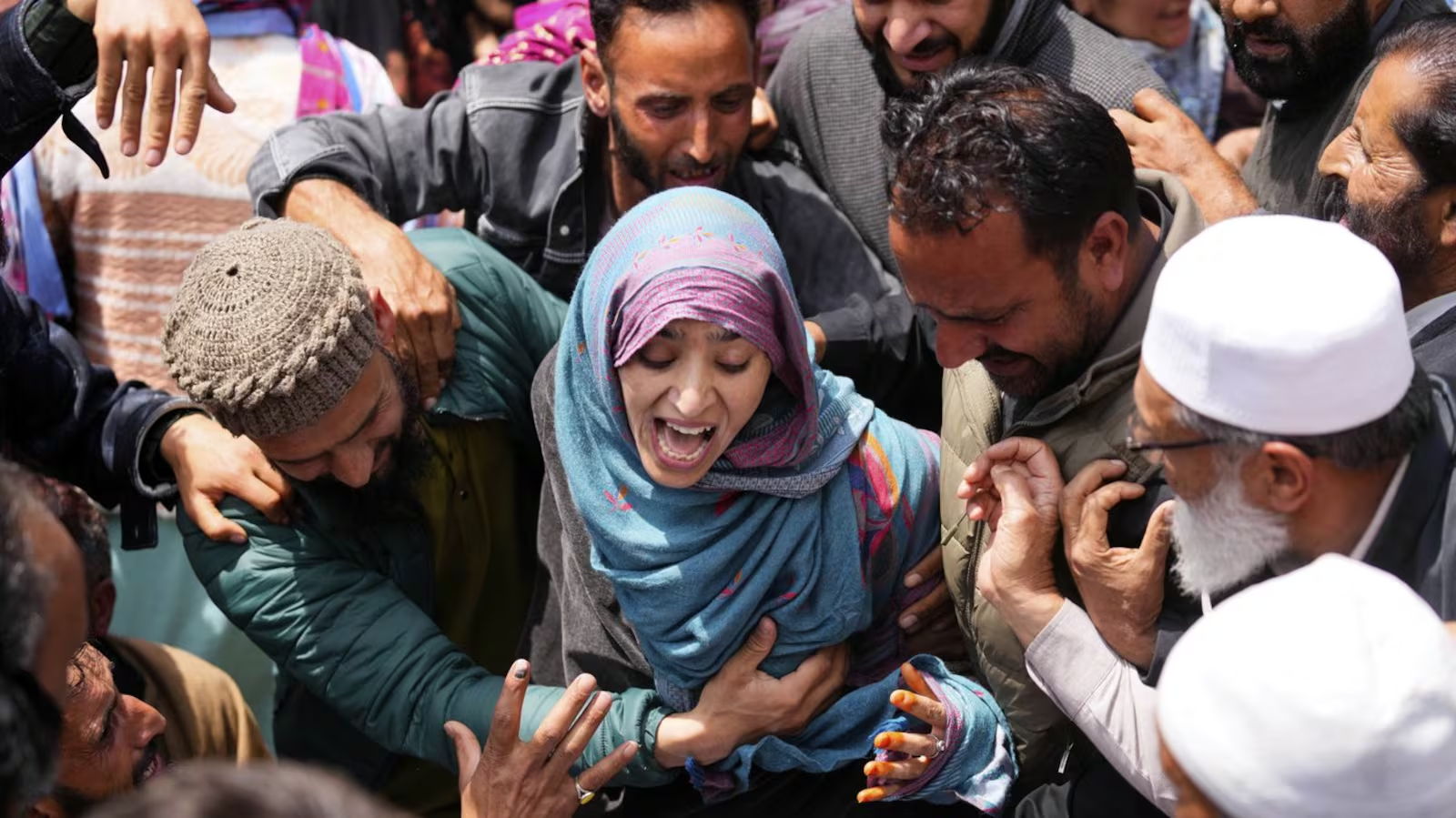
Security has been dramatically tightened across Indian-administered Kashmir following one of the deadliest attacks in the region in recent years. At least 26 people, including 24 Indian tourists, were killed Tuesday when gunmen opened fire near the scenic resort town of Pahalgam, triggering widespread panic and renewed fears of unrest.
A previously unknown militant group calling itself “Kashmir Resistance” claimed responsibility for the massacre, alleging the victims were linked to Indian security agencies. The claim, posted on social media, could not be independently verified. Indian authorities, however, described the attack as a “terrorist act”, blaming militants fighting against New Delhi’s control of the region.
In response, tens of thousands of troops and police were deployed across the region. Checkpoints were set up, vehicles were searched, and former militants were called in for questioning. Business owners across Kashmir shuttered shops in protest, heeding a call from political and religious leaders condemning the violence.
Indian Prime Minister Narendra Modi abruptly cut short his visit to Saudi Arabia and returned to New Delhi early Wednesday. Meanwhile, Home Minister Amit Shah arrived in Srinagar to oversee the response. Shah visited the families of the victims, laid floral tributes at a memorial ceremony, and vowed “the harshest consequences” for those responsible.
The site of the attack—Baisaran meadow, just five kilometers from Pahalgam—is a popular tourist destination, nestled in snow-capped peaks and pine forests. Now, its serenity has been replaced by helicopters scanning treetops and soldiers scouring trails.
Following the bloodshed, panicked tourists began fleeing Kashmir. “It’s beautiful here,” said Monojit Debnath of Kolkata. “But we no longer feel safe.” His sentiments echoed across social media, where political leaders mourned the tragedy and lamented the growing sense of fear.
This spike in violence comes despite an aggressive tourism push by the Indian government in the wake of Kashmir’s revoked autonomy in 2019. Though the region has seen a tourism boom, deadly attacks—particularly targeting Hindu workers and immigrants—have surged since New Delhi stripped the region of its semi-autonomous status.
India and Pakistan, both nuclear powers, administer parts of Kashmir but claim it in full. Armed insurgency has plagued the Indian side since 1989, with militants seeking either independence or union with Pakistan. While India accuses Islamabad of fueling militancy, Pakistan insists it supports a legitimate Kashmiri freedom movement.
The long-running conflict has claimed tens of thousands of lives. Tuesday’s attack was a grim reminder of the region’s volatility, bringing back memories of the Pulwama suicide bombing in 2019 and other past tragedies.
Despite recent lulls in violence in the Kashmir Valley, militant activity has increasingly shifted to areas like Rajouri, Poonch, and Kathua. Indian troops in those districts have suffered heavy casualties in recent months, and officials warn that the current calm is fragile.
As helicopters hover above Pahalgam and soldiers continue their search through thick forests, residents and officials alike brace for what comes next.