

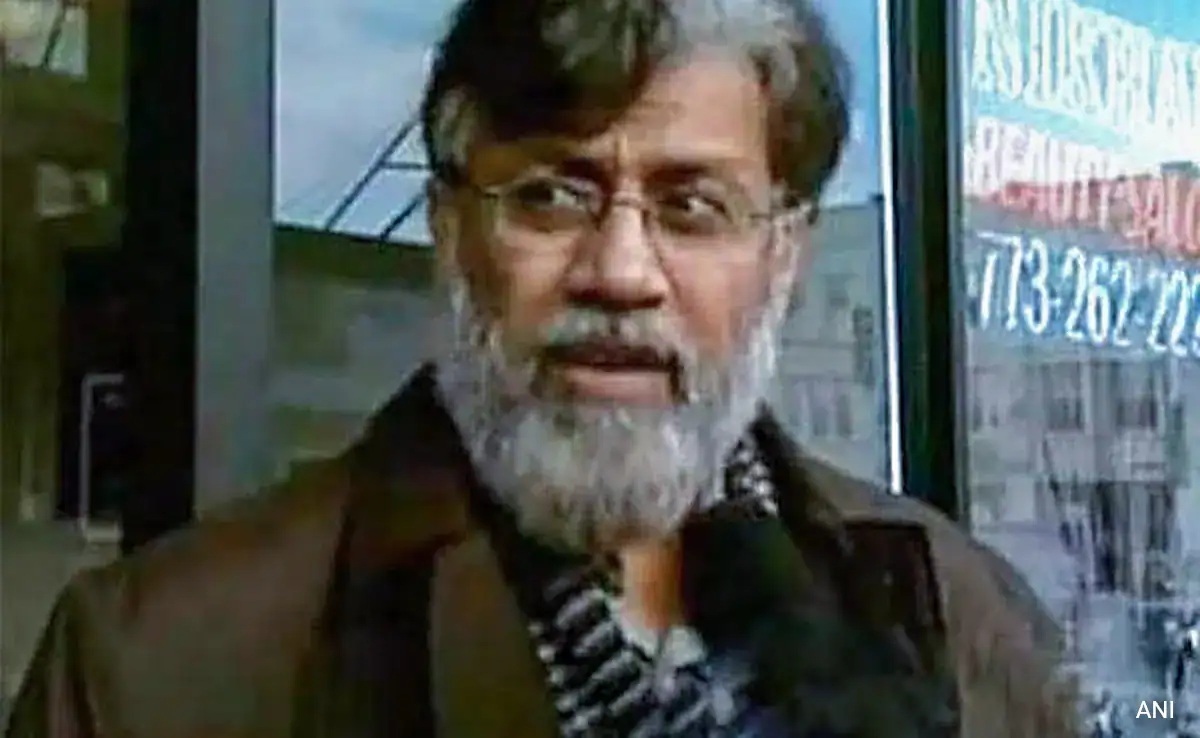
In a development hailed as a critical step in the pursuit of justice for the victims of the 2008 Mumbai terror attacks, the United States Department of Justice has confirmed the extradition of Tahawwur Hussain Rana to India, where he will stand trial on charges related to his alleged role in orchestrating the deadly assault carried out by Lashkar-e-Taiba (LeT).
Rana, a Pakistani-born Canadian citizen, was handed over to Indian authorities on April 10, following a protracted legal battle that included denials of stay applications by U.S. District Courts, the Ninth Circuit Court of Appeals, and ultimately the U.S. Supreme Court.
According to a statement issued by the Department of Justice, intercepted communications between Rana and David Coleman Headley—a convicted LeT operative and Rana’s longtime friend—reveal disturbing levels of support for the attacks. In one exchange, Rana allegedly praised the nine LeT terrorists who were killed during the assault and suggested they should be awarded Pakistan’s highest military gallantry honor, the “Nishan-e-Haider.” He also reportedly told Headley that the victims of the attacks “deserved it.”
The extradition comes 16 years after the coordinated terrorist attack in Mumbai from November 26 to 29, 2008, that claimed 166 lives, including six American citizens, and left hundreds injured. Over those three harrowing days, ten heavily armed LeT operatives stormed public spaces, including the Chhatrapati Shivaji Maharaj Terminus, Leopold Café, Taj Mahal Palace Hotel, and Nariman House, unleashing mass carnage through indiscriminate shootings and bombings.
India’s National Investigation Agency (NIA) has now taken custody of Rana and produced him before a special NIA court, which granted 18 days of judicial custody. The agency will interrogate Rana about his direct involvement and the broader conspiracy behind the 26/11 attacks, using newly presented evidence, including emails and intercepted messages.
The DOJ further stated that Rana played a crucial role in facilitating Headley’s activities. He allegedly opened a Mumbai branch of his immigration business, with Headley as manager, despite Headley’s lack of experience. Rana also allegedly assisted in filing fraudulent visa applications to help Headley carry out reconnaissance missions on behalf of LeT.
This is not the first time Rana has been tied to terrorism-related charges. In 2013, he was convicted in the U.S. for providing material support to LeT, including for a foiled terror plot in Copenhagen, and sentenced to 14 years in prison. Headley, who cooperated with U.S. authorities in exchange for a plea deal, is currently serving a 35-year sentence.
The NIA has confirmed that Rana’s questioning will also cover the involvement of other key accused in the 26/11 plot, including Ilyas Kashmiri and Abdur Rehman, both of whom Headley referenced in pre-attack emails. The agency believes this interrogation will uncover deeper details of the network behind one of India’s most tragic terrorist incidents.
Rana’s extradition was described by the Department of Justice as “a critical step toward justice for the six Americans and scores of other victims who were killed in the heinous attacks.”